Supply Chain AI That Connects Planning to Execution
AI systems for shippers, 3PLs, and carriers that connect demand planning to freight execution across multi-vendor logistics stacks.
BCG's February 2026 report found that only 10% of logistics providers report measurable financial impact from their AI investments. A July 2025 MIT NANDA study put the broader figure at 95% of enterprise AI pilots delivering zero measurable return. Meanwhile, 78% of supply chain leaders cite inaccurate demand forecasting as their top challenge, despite investing in advanced planning systems from Blue Yonder, o9 Solutions, SAP IBP, or Oracle.
The problem is not bad algorithms. It is AI layered onto fragmented data, disconnected systems, and planning processes that still run on monthly Excel cadences. That is the gap we work in: building the integration, data architecture, and operational workflows that make supply chain AI actually produce results.
Why Most Supply Chain AI Deployments Stall at the Pilot
A company buys a demand sensing module from o9 or Blue Yonder Luminate. The vendor runs a proof of concept on one product family. Forecast accuracy improves by 15–20%. The pilot gets presented to the C-suite. Then nothing happens, because nobody planned for what comes next:
- Cleaning SKU master data across regions
- Integrating the demand signal with a TMS from a different vendor
- Retraining the planning team
- Building the feedback loop between actual sales and model retraining
Only 23% of supply chain organizations have a formal AI strategy (Gartner). The rest run disconnected experiments. Our approach is to structure engagements around production deployment from day one: data pipelines, system connections, and team workflows designed for multi-site scaling before the first model trains (our research on architecting deep AI beyond wrappers for the enterprise).
The Visibility-to-Decision Gap
project44 and FourKites remain leaders in Gartner's Magic Quadrant for Real-Time Transportation Visibility. They connect to 800+ carriers, generate predictive ETAs, and aggregate data into control tower dashboards. The problem: dashboards do not make decisions. When a container is stuck at a transshipment port, the visibility platform tells you it is late. It does not:
- Adjust the downstream demand plan
- Re-tender the connecting freight leg
- Update the customer promise
- Trigger inventory rebalancing
That gap between knowing and acting is where money leaks. Agentic AI architectures now entering supply chain — SAP, Microsoft, Deloitte, and EY all published frameworks in Q1 2026 — can close that loop, but the orchestration layer connecting visibility signals to automated actions across TMS, WMS, OMS, and demand planning does not come from any single vendor. Our approach is to build it: event-driven architecture that takes a disruption signal and triggers the right actions across your systems, with human approval gates where decision risk warrants it (our antifragile logistics research).
Demand Planning That Earns Planner Trust
Most demand sensing implementations fail at change management, not algorithms. Planners built careers on judgment-based forecasting. The AI says demand will spike 22% next month. The planner asks why, and the model cannot explain itself. So the planner overrides it, and the override rate climbs until the system is a suggestion engine nobody follows.
We design explainability into the model architecture. Every forecast is built to include signal decomposition: which data sources drove the prediction, how much weight each carried, and where confidence is low enough for human override. Causal modeling is integrated for scenario analysis — for example, what happens if the tariff on Vietnamese imports rises from 46% to 60%? A 15% more accurate forecast that gets overridden is worse than a 10% improvement the team actually follows.
Trade Compliance in a Tariff Minefield
The US trade environment in 2026 is the most volatile in decades: a baseline 10% levy on all imports, up to 145% on Chinese goods, 46% on Vietnamese imports, with rates that change by political cycle. HS code classification sits at the center of the risk.
- 30% of HS classifications see disagreement even among human brokers.
- The best AI — a fine-tuned LLaMA 3.3-70B — achieves 40% accuracy at 10-digit HTS.
- For a shipper importing 1,000 SKUs monthly, a 5% error rate means 50 misclassified shipments — at penalties of EUR 1,917 to EUR 2,729 per incorrect declaration.
Our approach is to design classification systems around human-in-the-loop validation: AI handles straightforward commodity classifications, flags ambiguous items for expert review, and routes dual-use goods subject to EAR or ITAR to compliance specialists — with a full audit trail for customs authorities.
Freight Operations: Where the Money Leaks
Three to six percent of freight invoices contain errors: duplicate charges, misapplied discounts, incorrect accessorial fees, weight discrepancies. A shipper spending $50 million annually on transportation loses $1.5 to $3 million in overcharges. AI-powered freight audit shifts from recovery to prevention: pre-payment validation against contracted rates, historical patterns, and shipment-level data.
We design these systems to integrate with your TMS and AP workflow. Automated carrier scorecards tracking on-time delivery, claims ratios, and tender acceptance rates feed back into procurement, so you negotiate from evidence rather than anecdote (see a working demo of constraint-based scheduling optimization).
The Autonomous Freight Horizon
As of early 2026, Aurora has launched commercial driverless freight in Texas (April 2025) and tripled to 10 Sun Belt lanes, logging 100,000+ driverless miles with zero safety incidents and 100% on-time performance. Kodiak is preparing fully driverless long-haul by end of 2026, and FMCSA targets May 2026 for a proposed regulatory framework. This is a current-year operational decision for shippers on Sun Belt corridors.
The durable value is not any single carrier's mileage but the ability to fold autonomous freight into your stack as it reaches your lanes — work neither AV companies nor TMS vendors have solved. How does your carrier scorecard handle a fleet with zero drivers? How does your insurance framework cover autonomous loads? Our approach is to help shippers build the operational and technical framework to incorporate autonomous freight as it becomes available on their lanes (our technical research on graph reinforcement learning for logistics).
Cybersecurity and Compliance Exposure
Blue Yonder was hit by ransomware in November 2024, disrupting Morrisons and Sainsbury's operations. Supply chain-specific attacks nearly doubled in 2025, from 154 to 297 incidents. Logistics stacks are especially vulnerable because they are integration-heavy — TMS to carrier APIs, WMS to warehouse control systems, visibility platforms ingesting from hundreds of sources — and each connection is an attack surface.
Separately, Scope 3 emissions account for up to 90% of a logistics company's carbon footprint, yet only 9% of organizations can monitor them comprehensively. Under the EU CSRD, large companies must report Scope 3 for FY 2025, with reports due in 2026. Our approach addresses both exposures: security assessments with network segmentation for critical logistics systems, and emissions data collection infrastructure using GLEC Framework and ISO 14083 calculation methodologies integrated with sustainability reporting workflows.
Why Not Accenture, Deloitte, or Your Platform Vendor?
Big consultancies charge $300 to $500 per hour, staff from general pools, and run 6-to-18-month engagements that produce strategy decks and program management. If your challenge is Fortune 500 organizational transformation, hire them. If your challenge is that your Blue Yonder demand plan does not talk to your Oracle TMS, your FourKites data does not trigger automated re-planning, or your freight invoices leak $2 million a year, the big firms will sell you a program when you need an engineer who understands both the API documentation and the business logic.
Platform vendors build excellent products inside their ecosystem. None has an incentive to build the cross-vendor integration layer that most real supply chains require. We work vendor-neutral, designing the connective tissue between your existing systems, without platform lock-in.
Key Takeaways
- The failure of supply chain AI is an integration problem, not an algorithm problem — fragmented data, disconnected systems, and Excel-cadence planning, not bad models.
- Value lives in the loop between visibility and action: closing knowing-to-acting across TMS, WMS, OMS, and demand planning is where leaked money is recovered.
- Explainability, not raw accuracy, wins planner adoption — a 10% gain the team follows beats a 15% gain they override.
- Tariff volatility, HS-code risk, freight overcharges, autonomous freight, ransomware, and CSRD Scope 3 are all live 2026 exposures that reward human-in-the-loop systems built on your existing stack.
- We work vendor-neutral, building the cross-vendor connective tissue platform vendors and big consultancies won't — no platform lock-in.
Solutions for Transport, Logistics & Supply Chain
 Watch
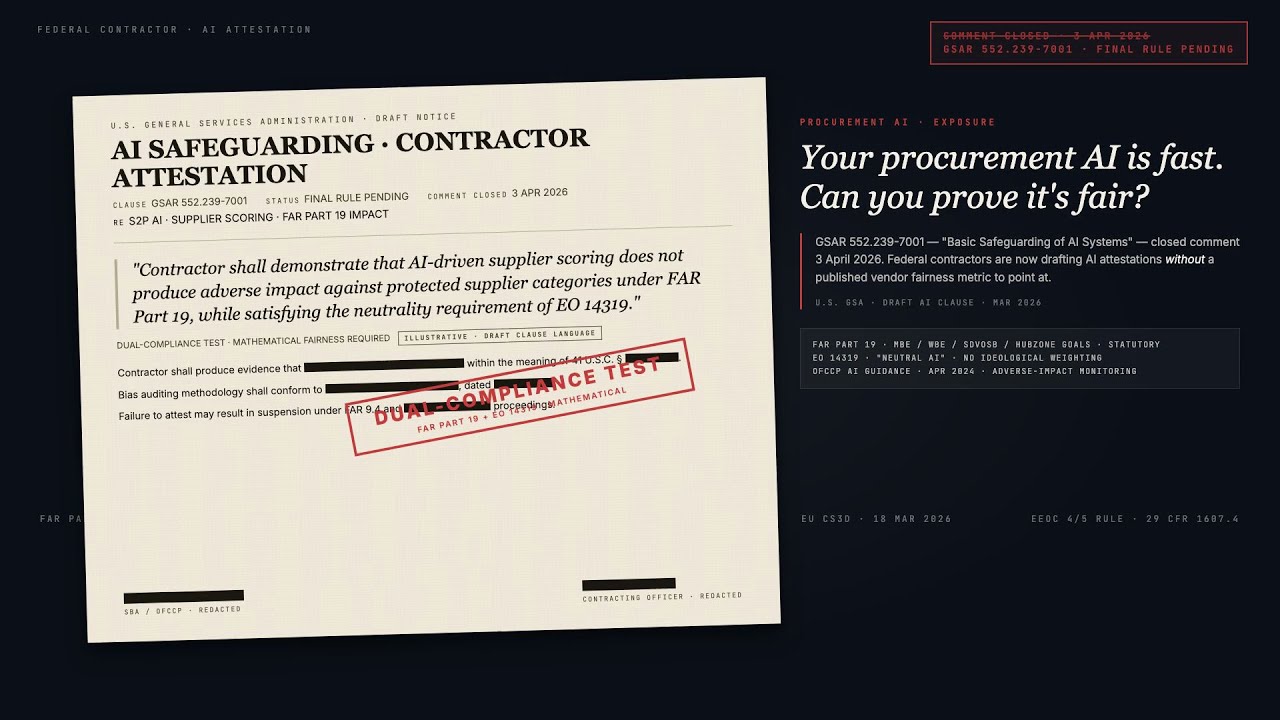
WatchAI Procurement Fairness & Supplier Diversity Compliance
Audit your procurement AI for bias. Veriprajna builds vendor-agnostic fairness testing for SAP Ariba, Coupa, GEP, and Ivalua supplier scoring, ensuring FAR Part 19 compliance and provable algorithmic equity.
 Watch
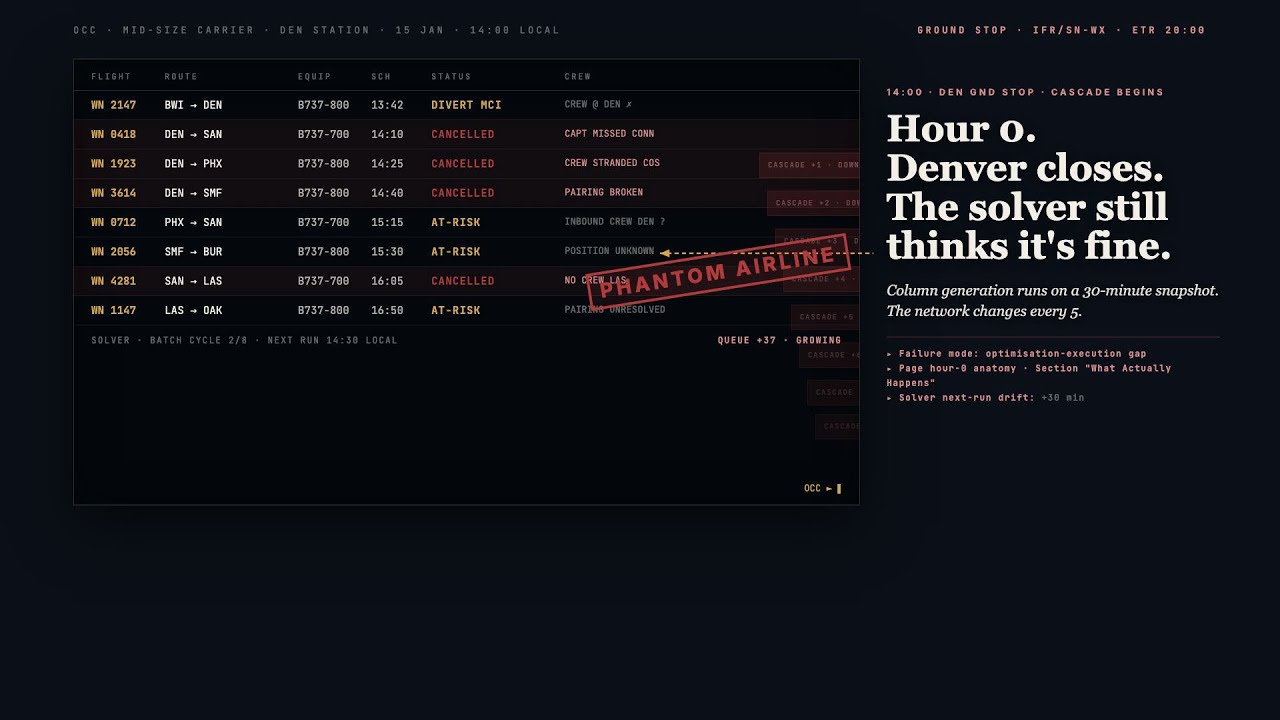
WatchAirline Crew Scheduling AI: IROPS Recovery That Works When Legacy Solvers Fail
AI-powered crew scheduling and IROPS recovery for mid-size airlines. Augment Jeppesen or IBS with ML that handles cascading disruptions, crew tracking gaps, and DOT refund exposure.
Frequently Asked Questions
Why do 95% of supply chain AI pilots fail to deliver measurable results?
A July 2025 MIT NANDA study found that 95% of enterprise AI pilots deliver zero measurable return. In supply chain specifically, BCG's February 2026 report shows only 10% of logistics providers report measurable financial impact from AI. The cause is not bad algorithms. It is fragmented data (SKU master data inconsistent across regions), disconnected systems (demand planning from one vendor, TMS from another, WMS from a third, with no integration layer), and planning processes that were never redesigned to use AI outputs. Only 23% of supply chain organizations have a formal AI strategy. We structure engagements around production deployment, not pilots. The integration architecture, data pipelines, and team workflows are designed for multi-site scaling before the first model trains.
How do we close the gap between supply chain visibility and automated decision-making?
Visibility platforms like project44 and FourKites tell you a shipment is late. They do not adjust your demand plan, re-tender the connecting freight leg, update the customer promise, or trigger inventory rebalancing. That gap between knowing and acting is where money leaks. Agentic AI architectures now make it possible to close the loop: event-driven systems that take a disruption signal and trigger the right sequence of actions across TMS, WMS, OMS, and planning systems. But every company's system mix is different, so the orchestration layer has to be custom-built. We design the event routing, the decision logic (which actions are automated vs. which require human approval), and the integrations specific to your stack.
What does it actually cost to get AI demand planning working in production?
The software license is the smallest part. Blue Yonder and o9 Solutions charge based on revenue band and module scope, typically six to seven figures annually. The real cost is the 12 to 18 months of integration work: data pipeline construction, master data cleanup, ERP and TMS integration, workflow redesign, and team retraining. Most implementations stall because the budget covered the software but not the integration. The override rate climbs (planners do not trust the system, so they manually adjust forecasts), and within a year the AI is a suggestion engine nobody follows. We front-load the integration and change management work so the system earns planner trust from the start. Explainability is built into the model: every forecast shows which signals drove it and where confidence is low enough for human override.
How accurate is AI at HS code classification, and what are the risks of getting it wrong?
The best available AI, a fine-tuned LLaMA 3.3-70B model, achieves 40% accuracy at the 10-digit HTS level and 57.5% at the 6-digit level. Generic LLMs score significantly worse. Thirty percent of HS classifications see disagreement even among human experts, which gives a sense of the problem's inherent difficulty. The risk of errors is concrete: penalties of EUR 1,917 to EUR 2,729 per incorrect declaration in EU jurisdictions, potential shipment delays, and for dual-use goods under EAR or ITAR, serious legal exposure. We build classification systems with a human-in-the-loop design: AI handles clear-cut commodity classifications, flags ambiguous items for expert review, and routes anything touching export controls to compliance specialists. The system maintains a full audit trail for customs authorities.
Is autonomous trucking ready for our freight network?
On specific corridors, yes. Aurora launched commercial driverless freight in Texas in April 2025, tripled to 10 Sun Belt lanes by February 2026, and logged 100,000+ miles with zero safety incidents and 100% on-time performance. Kodiak is preparing fully driverless long-haul by end of 2026. FMCSA is targeting a proposed regulatory framework in May 2026. The practical question for shippers is not whether autonomous freight works, but whether your freight procurement, carrier management, and compliance systems can accommodate it. Carrier scorecards designed around driver-dependent metrics need rethinking. Insurance frameworks need updating. If you ship on Sun Belt corridors, planning for autonomous carrier integration now, before it becomes a competitive disadvantage, is the right move.
How do we protect our logistics tech stack from ransomware when every system is connected?
Blue Yonder was hit by ransomware in November 2024, disrupting operations at Morrisons and Sainsbury's. Supply chain-specific attacks nearly doubled in 2025, from 154 to 297 incidents. The average ransomware demand reached $1.16 million. Logistics stacks are especially vulnerable because they are integration-heavy: TMS to carrier APIs, WMS to warehouse control systems, visibility platforms ingesting from hundreds of sources. Each connection is a potential entry point. We assess logistics architectures for exposure, design network segmentation that isolates critical systems (freight payment, inventory data, customer records) from lower-trust integrations, and build incident response plans where a ransomware event does not just lock files but can halt physical goods movement across the network.
What do we actually need to comply with CSRD Scope 3 reporting for logistics?
Scope 3 emissions represent up to 90% of a logistics company's total carbon footprint, but only 9% of organizations can comprehensively monitor them. Under CSRD, large companies must report for FY 2025 (due 2026). You need emissions data from every carrier, warehouse operator, and last-mile provider in your network, normalized and auditable. The gap is data collection: most logistics partners cannot provide primary emissions data at the shipment level. We build the collection infrastructure and implement accepted calculation methodologies (GLEC Framework, ISO 14083) using operational data you already have: shipment weights, distances, transport modes, and vehicle types. The result integrates with your sustainability reporting workflow and produces the documentation that third-party verifiers require.
How much are freight invoice errors actually costing us?
Industry data shows 3 to 6% of freight invoices contain errors: duplicate charges, rate deviations from contract terms, incorrect accessorial fees, and weight discrepancies. For a shipper spending $50 million annually on transportation, that is $1.5 to $3 million in overcharges per year. Most companies discover these after payment, if at all. AI-powered pre-payment audit catches errors before the money leaves. We build freight audit systems that check every invoice against contracted rates, historical patterns, and shipment-level data, integrated with your TMS and accounts payable workflow. Exceptions surface for human review. The system also feeds carrier performance data back into procurement, so you negotiate from evidence.
Build Your AI with Confidence.
Partner with a team that has deep experience in building the next generation of enterprise AI. Let us help you design, build, and deploy an AI strategy you can trust.
Veriprajna Deep Tech Consultancy specializes in building safety-critical AI systems for healthcare, finance, and regulatory domains. Our architectures are validated against established protocols with comprehensive compliance documentation.