AI Strategy and Readiness Assessment That Connects to Execution
We assess organizational AI readiness, quantify implementation risk, and build executable strategy roadmaps that connect use case prioritization to architecture decisions.
Most enterprise AI initiatives fail before production not because the models are weak, but because organizations deploy without knowing their actual readiness. We assess that readiness across the dimensions that decide whether a project survives contact with production, quantify implementation risk, and turn the findings into a prioritized roadmap that connects directly to architecture (detailed in our research on strategic resilience beyond the wrapper era).
Why AI Initiatives Fail Before Production
These failures rarely stem from model quality. They stem from organizations deploying AI without understanding their actual readiness across the five dimensions that determine whether a project survives contact with production: data quality and lineage, infrastructure capacity, workforce skills, process maturity, and regulatory exposure.
The pattern is consistent across every benchmark above: organizations overestimate their readiness, underestimate the gap, and learn the truth expensively during failed pilots.
The Six Readiness Dimensions We Assess
Each dimension is scored against observable criteria rather than self-reported survey responses.
- Data readiness — catalog accuracy, lineage traceability, refresh cadence, PII mapping, and pipeline reliability.
- Infrastructure readiness — compute capacity, MLOps tooling maturity, deployment pipeline automation, and monitoring capabilities.
- Talent readiness — the gap between current team skills and what the target use cases require, distinguishing "we have data scientists" from "we have engineers who have shipped models to production."
- Process maturity — development lifecycle, change management, incident response, and whether the organization can actually operate AI systems at the reliability level the business case assumes.
- Governance readiness — existing policy frameworks, risk management processes, and regulatory awareness against applicable obligations.
- Agent orchestration readiness — added for agentic AI deployments: identity management strategy, decision attribution architecture, cascading-failure containment, and human-oversight mechanisms.
The gap between claim and reality is routine. When an organization insists "we have the data," scoring against observable criteria is designed to surface the difference — a catalog that documents 40% of actual data assets, lineage that is untraceable for critical tables, and refresh jobs that fail silently three times a month.
Agent orchestration readiness is newly critical: only 12% of enterprises have a centralized platform for agent governance (OutSystems, April 2026), and most readiness frameworks still don't assess for it.
Use Case Prioritization That Prevents Expensive Mistakes
The most common strategic error is selecting AI use cases based on executive enthusiasm rather than feasibility analysis. We evaluate every candidate use case across four axes:
- Business value — revenue impact, cost reduction, risk mitigation.
- Technical feasibility — data availability, model complexity, integration requirements.
- Organizational readiness — does the team that would own this have the skills and process maturity to operate it?
- Risk-adjusted ROI — accounting for regulatory exposure, failure probability, and time-to-value.
Each use case is scored and plotted. High-value, high-feasibility cases with low risk go first. High-value cases with readiness gaps get a remediation plan with cost and timeline before they enter the roadmap.
Low-feasibility cases that executives are attached to get an honest assessment of what it would take to make them viable — often revealing that the prerequisite investments change the ROI calculation entirely. The output is a prioritized portfolio with dependency mapping, not a wish list.
Build, Buy, or Orchestrate: The 2026 Decision Framework
The binary build-versus-buy question is outdated. In 2026, AI systems are assembled from components: foundation models from Anthropic, OpenAI, Google, or Meta's open-weight Llama family; orchestration frameworks like LangGraph or CrewAI; vector stores like Pinecone or pgvector; guardrail layers; and custom domain logic — a shift from LLM wrappers to assembled deep-AI systems we examine in our research on the GenAI divide.
The real decision is which layers to own and which to rent. We evaluate it on three axes — capability (can the team build and maintain this component?), criticality (is it a source of competitive differentiation or a commodity?), and control (does owning this layer reduce vendor lock-in risk that matters for this organization?).
The framework produces specific component-level decisions, not a blanket "build" or "buy" recommendation:
| Use case | Own | Rent or orchestrate |
|---|---|---|
| Healthcare company building clinical decision support | Domain knowledge layer and safety validation pipeline | Foundation model and vector store |
| Fintech building fraud detection | Feature engineering pipeline and model | Everything else |
Risk Quantification Before You Spend
Risk assessment that produces a color-coded matrix is not risk management. Our approach builds risk registers with quantified exposure across five categories:
- Technical risk — model failure modes, data pipeline fragility, integration complexity, performance degradation under load.
- Regulatory risk — EU AI Act classification (Annex III high-risk obligations enter force August 2026), applicable US state laws (Colorado SB 205 algorithmic discrimination provisions, Texas TRAIGA, Illinois HB 3773 employment AI rules), and sector-specific requirements — the regulatory-truth terrain covered in our research on enterprise AI regulatory truth and algorithmic accountability.
- Organizational risk — talent gaps, shadow AI exposure (68% of employees use AI tools the organization has never evaluated, per Menlo Security 2025), change management capacity.
- Financial risk — total cost of ownership including infrastructure, talent, vendor contracts, compliance overhead, and the opportunity cost of delayed deployment.
- Strategic risk — vendor lock-in, technology obsolescence, competitive positioning.
Each risk is characterized by likelihood, impact severity, velocity of onset, and current control maturity, using NIST AI RMF's govern-map-measure-manage structure. The intended output is not a report to file — it is a decision tool designed to tell leadership exactly which risks to accept, which to mitigate, and what the mitigation costs.
Why This Isn't a Big 4 Engagement
Mid-market companies can expect to invest $500K or more for strategy alone with a Big 4 firm, scaling to $3–10M for full implementation over 12–24 months — with deliverables often built for 10,000-employee organizations and then scaled down. A boutique firm with hands-on technical capability — the kind behind working demos like our live risk-underwriting system — delivers first value in 4–12 weeks at 40–60% lower cost.
| Big 4 firm | Boutique (hands-on technical) | |
|---|---|---|
| Strategy cost | $500K or more for strategy alone | 40–60% lower cost |
| Full implementation | $3–10M over 12–24 months | First value in 4–12 weeks |
| Who you work with | The people who manage the project plan | The people who design, build, and deploy AI systems |
Our approach connects strategy directly to architecture. When the readiness assessment identifies that "build a RAG system for contract review" is the top-priority use case, the engagement is scoped to specify the exact infrastructure, data pipeline, retrieval architecture, and guardrail requirements that inform the implementation budget.
Strategy without architecture is a deck. Strategy with architecture is a plan you can actually execute.
Key Takeaways
- Most AI failures are readiness failures, not model failures — assess six dimensions against observable criteria, not self-reported surveys.
- Prioritize use cases on business value, technical feasibility, organizational readiness, and risk-adjusted ROI — not executive enthusiasm.
- Build versus buy is now a component-level decision made across capability, criticality, and control.
- Quantify risk across technical, regulatory, organizational, financial, and strategic categories using NIST AI RMF before committing implementation budget.
- Strategy that connects to architecture is a plan you can execute; strategy without it is a deck.
Solutions for AI Strategy, Readiness & Risk Assessment
 Watch
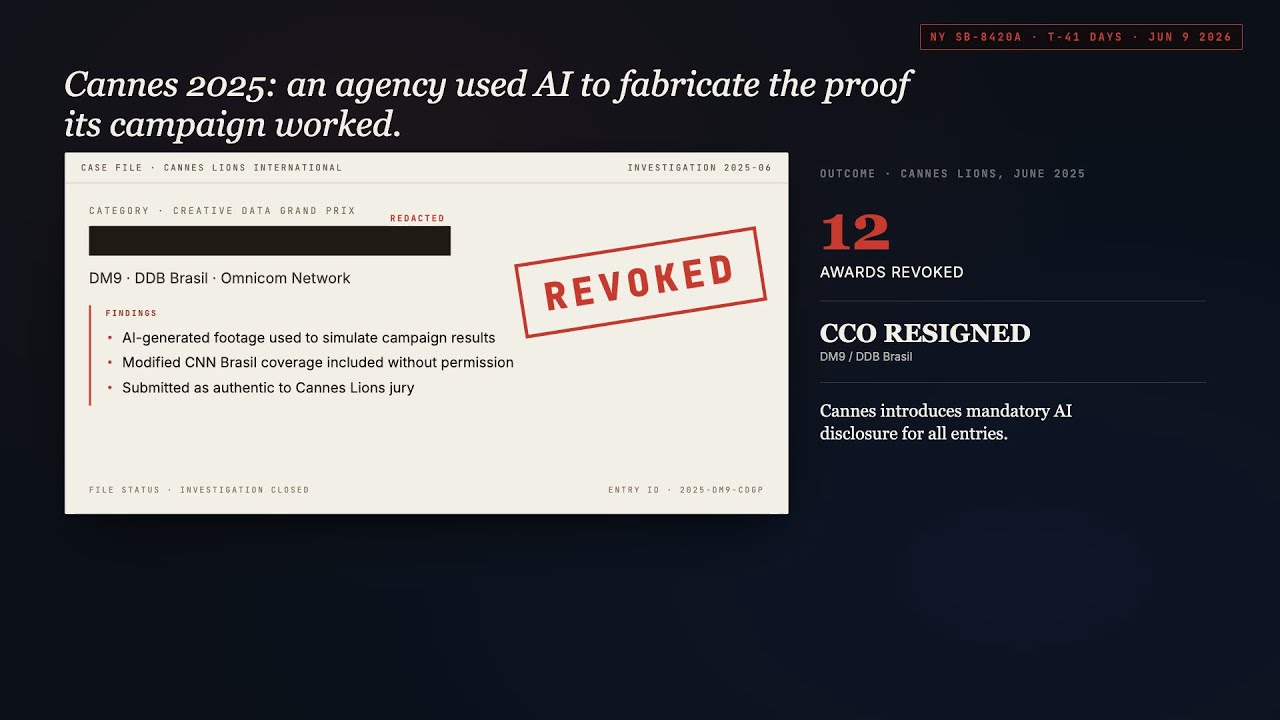
WatchAI Brand Content That Consumers Actually Trust
The other half doesn't care, as long as they can't tell. We build hybrid AI production pipelines, brand fidelity scoring systems, and governance frameworks that let you use AI aggressively in the process while keeping it invisible in the output.
 Watch
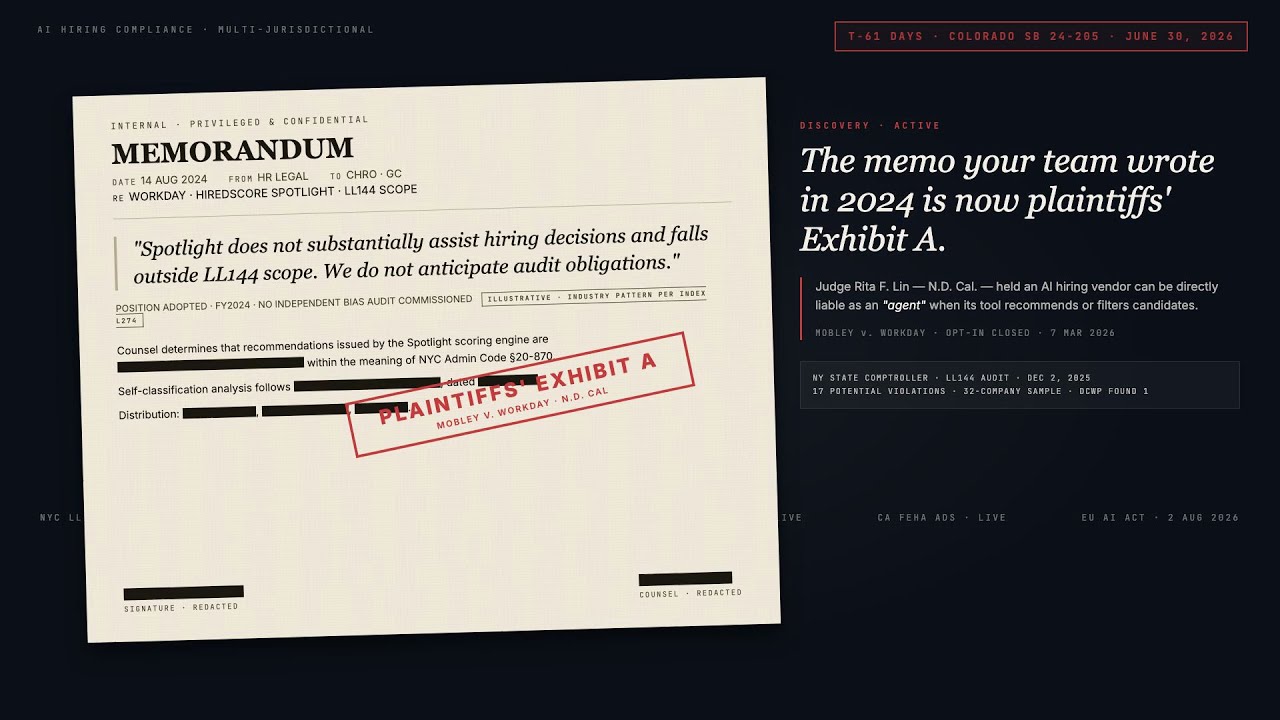
WatchAI Hiring Compliance & Bias Audits for Multi-Jurisdiction Employers
As of April 2026, the CHRO or General Counsel running AEDTs in New York, Colorado, Illinois, Texas, California, or the EU is inside a regulatory window most of their vendors were not built for. Illinois HB 3773 went live January 1. Texas TRAIGA went live January 1.
 Watch
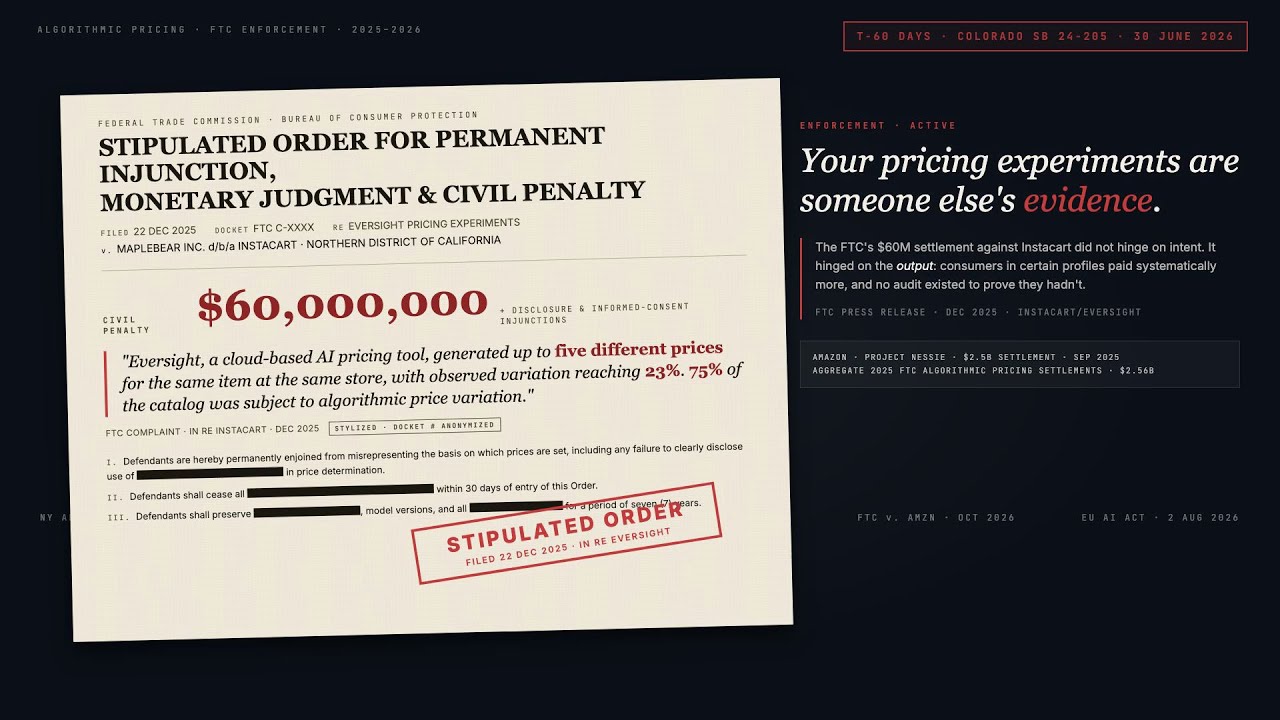
WatchAI Pricing Compliance & Algorithmic Fairness
In 2025, the FTC collected $2. 56 billion in algorithmic pricing settlements from two companies. New York, California, and Colorado enacted laws that make every AI-driven price a potential violation.
 Watch
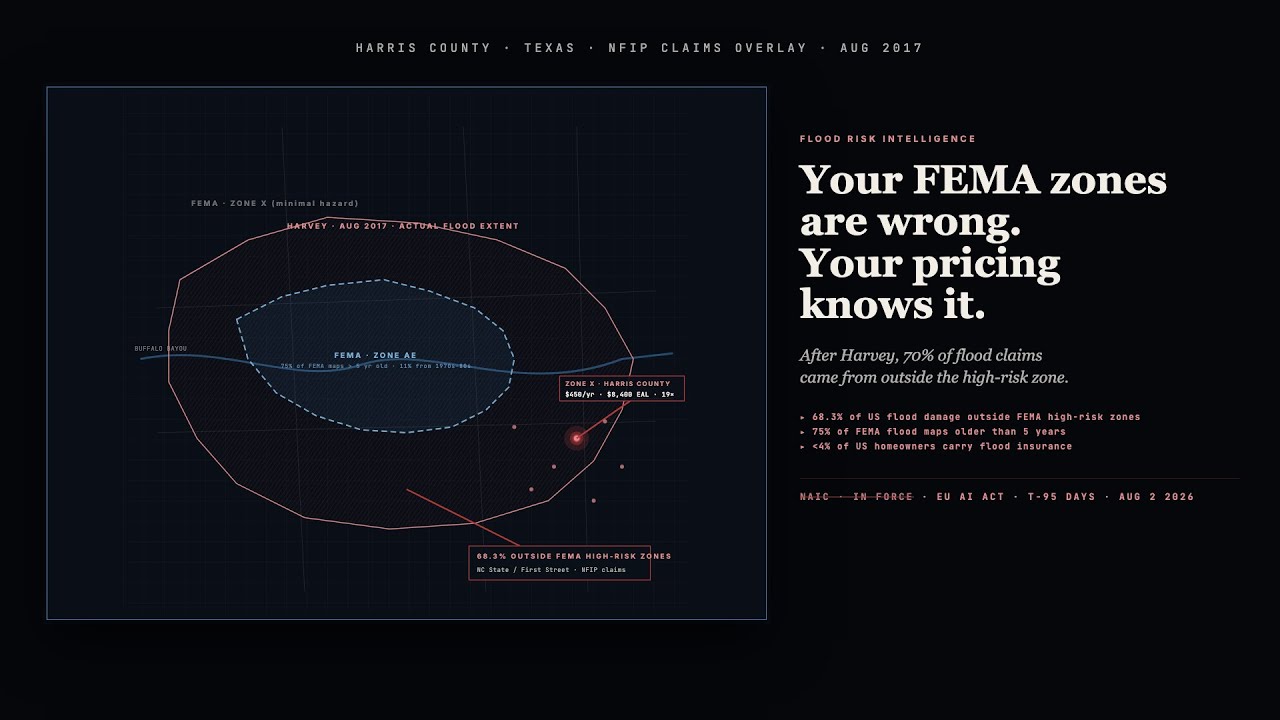
WatchAI-Powered Flood Risk Underwriting
More than two-thirds of US flood damage occurs outside FEMA's high-risk zones. If your rating engine still anchors to Zone AE vs. Zone X, you're mispricing risk on both sides: overcharging the elevated house inside the zone, undercharging the slab-on-grade house outside it.
 Watch
WatchAdaptive Learning AI for Corporate Training
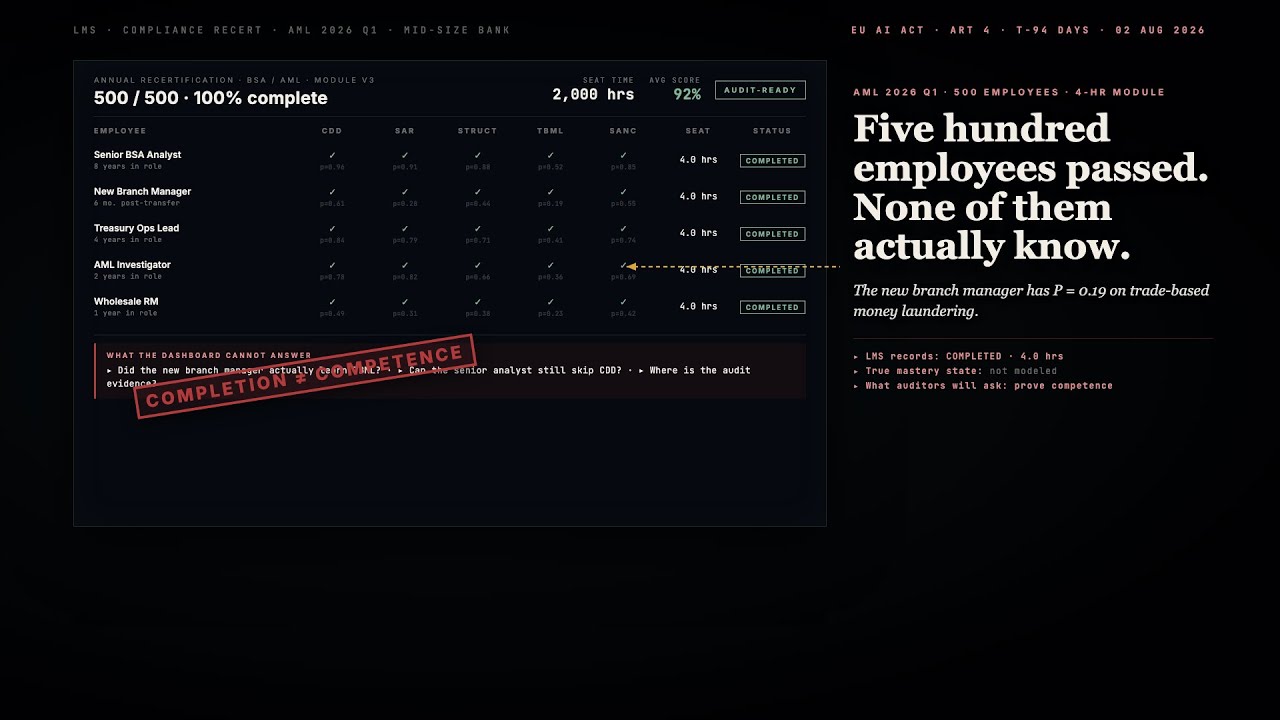
Custom adaptive learning systems with knowledge tracing AI that reduce compliance training time by up to 50%. Integrates with your existing LMS via xAPI and LTI.
 Watch
WatchAgentic AI Travel Booking for TMCs and OTAs
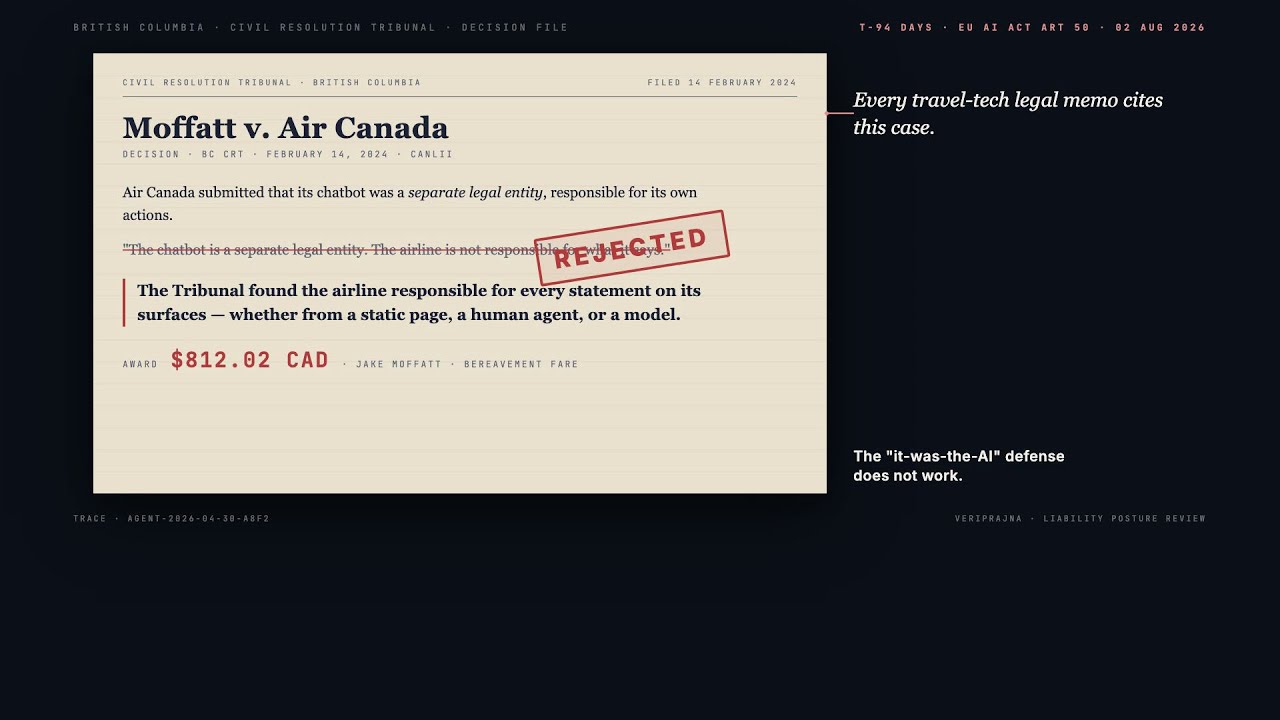
Sabre with Mindtrip and PayPal is shipping end-to-end agentic booking in Q2 2026. Google AI Mode is booking Marriott directly. Amadeus Cytric Easy lives inside Microsoft Teams.
 Watch
WatchConversational AI for Publishers: RAG Over News Archives
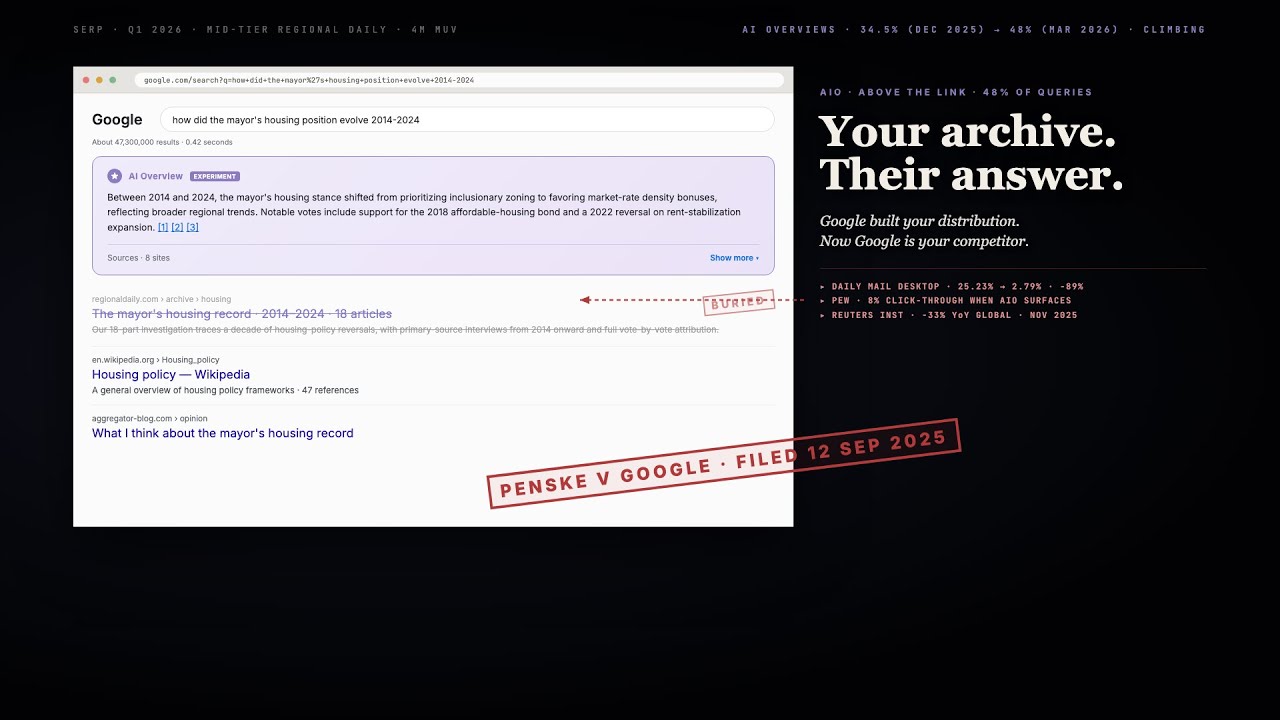
We build conversational AI engines on top of publisher archives. Citation-enforced answers, temporal reasoning, GraphRAG entity resolution, and a parallel licensing strategy that captures revenue from the AI engines you do not control. For mid-tier publishers who cannot afford a six-engineer ML team but cannot afford to wait, either.
 Watch
WatchEnterprise AI Validation for Regulated Industries
Klarna replaced 700 customer service agents with AI. Costs dropped 40%. Then satisfaction collapsed, repeat contacts spiked, and Q1 2025 ended with a $99 million net loss.
 Watch
WatchHyperspectral AI for Precision Agriculture
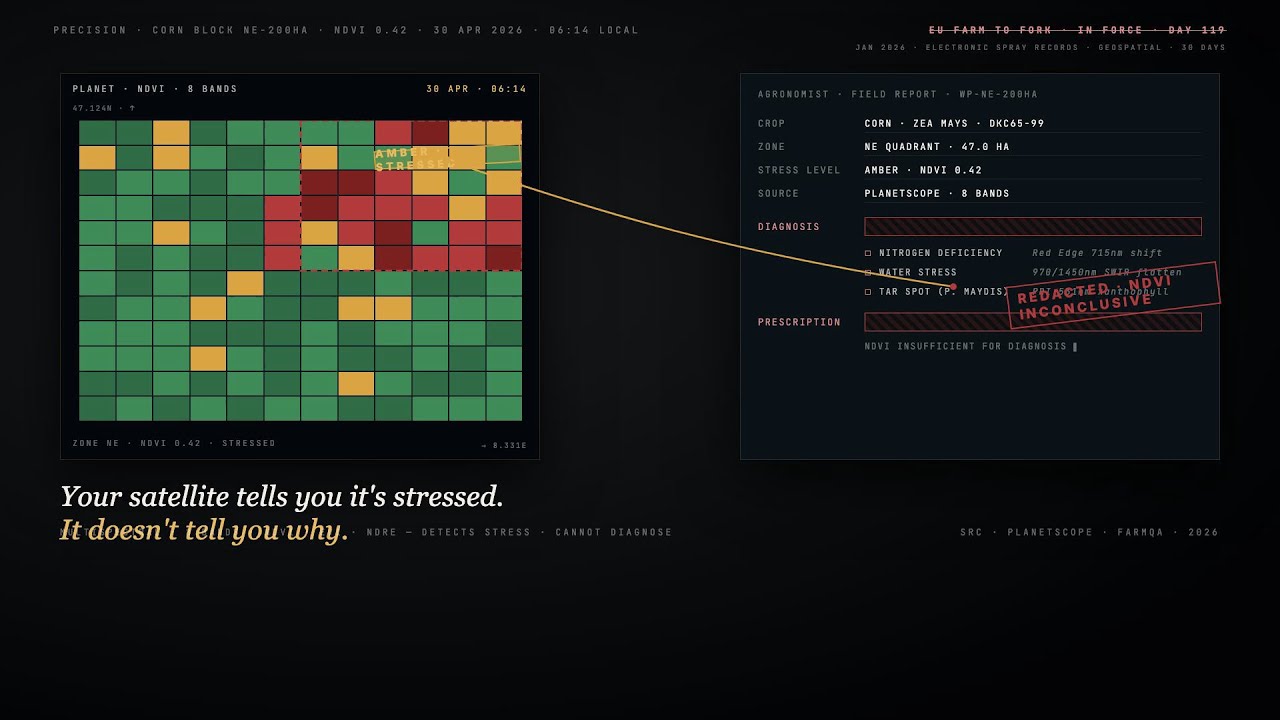
Multispectral monitoring (Planet, Sentinel-2, NDVI) detects that something is wrong. Hyperspectral deep learning diagnoses what is wrong, why, and what to do about it. We build the custom spectral analytics that close the gap between detection and prescription for large-scale farming operations and specialty growers.
 Watch
WatchInsurance Claims AI & Deepfake Detection
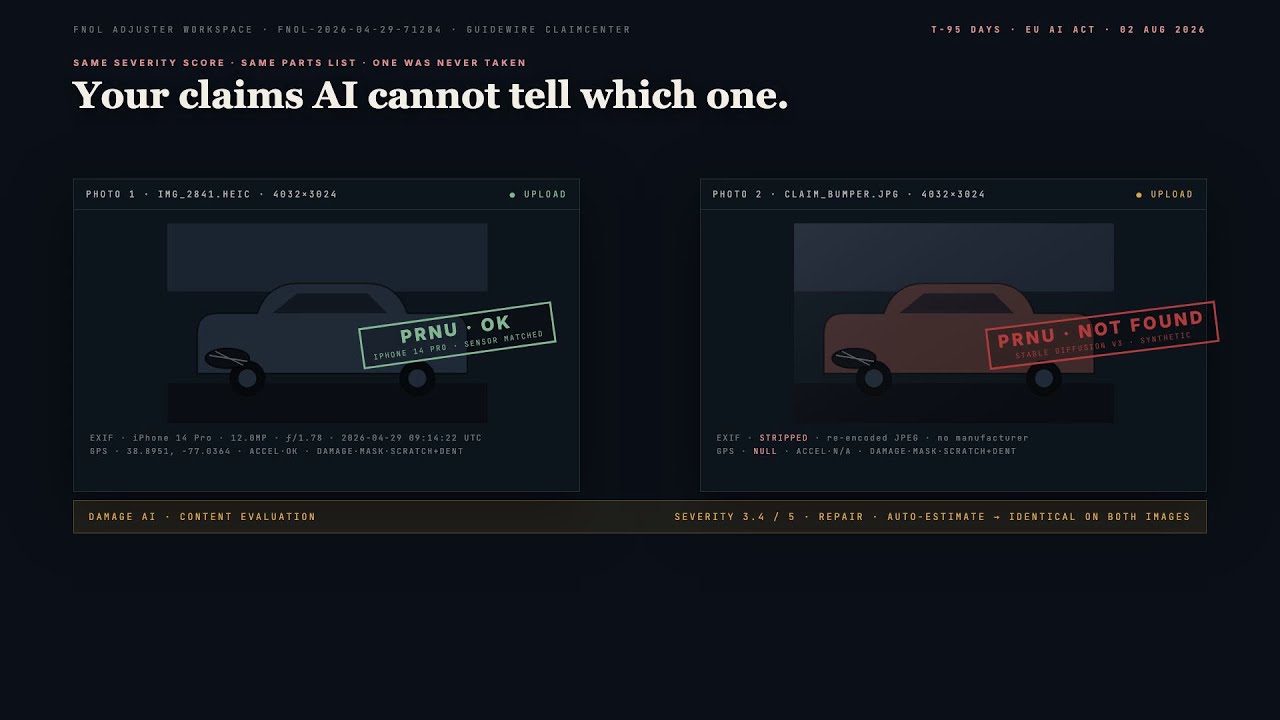
Auto insurers are caught between two AI-driven threats: fraudsters generating synthetic damage photos that pass existing checks, and "enhancement" tools that alter evidence before adjusters see it. Veriprajna builds forensic computer vision that authenticates, measures, and preserves every pixel of claims evidence.
Frequently Asked Questions
How long does an AI readiness assessment take and what does it cost?
A focused readiness assessment covering data, infrastructure, talent, process, and governance dimensions takes 4-8 weeks depending on organizational complexity and the number of business units involved. Boutique firms with hands-on technical capability price this at $75,000-$250,000 for a comprehensive assessment with prioritized roadmap. Big 4 firms typically start at $500,000 for strategy alone. The timeline depends on three factors: how many AI systems are already in production (more systems means more discovery work), how many jurisdictions create regulatory obligations, and whether the organization has an existing data catalog or if discovery starts from scratch. Organizations with fewer than five AI use cases under consideration and a single primary jurisdiction can complete assessment in 4 weeks. Enterprises with 20+ candidate use cases across regulated industries typically need 6-8 weeks.
Why do enterprise AI projects keep failing after the pilot stage?
S&P Global found that 42% of companies abandoned the majority of their AI initiatives in 2025, up from 17% the prior year. RAND Corporation research puts the overall failure rate above 80%. The consistent root causes are not technical. They are: data foundations that cannot support production workloads (only 14% of business leaders believe their data maturity supports AI at scale), unclear business value that dissolves when pilot results meet production economics, talent gaps between data scientists who can train models and engineers who can deploy and operate them, and organizational readiness gaps where change management, incident response, and operational processes were never built. A proper readiness assessment surfaces these gaps before the first dollar of implementation spend.
What is the difference between AI strategy and AI governance?
AI strategy is the upstream work: assessing organizational readiness, identifying which AI capabilities to pursue, prioritizing use cases by risk-adjusted ROI, deciding what to build versus buy versus orchestrate, and producing an executable roadmap. AI governance is the operational program that ensures AI systems are developed and deployed responsibly once you have decided what to build. Strategy asks 'what should we do and are we ready to do it.' Governance asks 'how do we ensure what we build meets regulatory, ethical, and operational standards.' Most organizations need both, but starting governance without strategy means governing systems that may not be the right ones to build in the first place. Starting strategy without governance awareness means producing roadmaps that ignore compliance timelines and regulatory costs.
Should we hire a Chief AI Officer or can our CTO handle AI strategy?
26% of organizations now have a CAIO, up from 11% two years ago (IBM). The role makes sense when AI touches multiple business units and requires cross-functional coordination that exceeds what a CTO can manage alongside infrastructure, security, and engineering operations. For organizations with fewer than five AI initiatives and a CTO with genuine ML deployment experience, a dedicated CAIO may be premature. For organizations where AI intersects regulated activities, touches customer-facing decisions, or spans multiple business units, the cross-functional coordination burden justifies a dedicated role. A fractional CAIO or a strategy engagement that produces the organizational design recommendation is often the right first step before committing to a $350K-$650K+ permanent hire. We help organizations make this decision based on their specific AI footprint, regulatory exposure, and organizational complexity.
How do we decide what to build vs. buy vs. orchestrate for AI in 2026?
The binary build-versus-buy question is outdated. In 2026, AI systems are assembled from components: foundation models, orchestration frameworks, vector stores, guardrail layers, and custom domain logic. The decision is which layers to own and which to rent. We evaluate on three axes. Capability: does your team have the skills to build and maintain this component? Criticality: is this component a competitive differentiator or a commodity? Control: does owning this layer reduce vendor lock-in risk that actually matters for your business? A healthcare company building clinical decision support should own the domain knowledge layer and safety validation, but renting the foundation model is fine. A fintech building fraud detection might need to own feature engineering and model training but can orchestrate everything else. The framework produces component-level decisions specific to each use case, not a blanket recommendation.
How should we prepare for EU AI Act compliance before August 2026?
Annex III high-risk AI system obligations enter force August 2, 2026. Preparation starts with classification: mapping every AI system against the high-risk categories (biometric identification, critical infrastructure, employment, essential services, law enforcement, migration, education, insurance). Each high-risk system requires a risk management system maintained throughout the lifecycle, technical documentation meeting Annex IV specifications, data governance practices, transparency measures, human oversight provisions, and accuracy and robustness testing. Our readiness assessment identifies which of your current and planned AI systems fall under high-risk classification, maps the gap between current documentation and what conformity assessment requires, and produces a remediation plan with timeline. Organizations with EU customers or operations that have not started classification should treat this as urgent. The conformity assessment and documentation requirements take months to implement properly.
How do you quantify AI implementation risk before we start spending?
We build risk registers across five categories: technical (model failure modes, data pipeline fragility, integration complexity), regulatory (EU AI Act classification, US state law applicability, sector requirements), organizational (talent gaps, shadow AI exposure, change management capacity), financial (total cost of ownership including infrastructure, talent, vendors, compliance overhead), and strategic (vendor lock-in, technology obsolescence, competitive positioning). Each risk is characterized by likelihood, impact severity across financial/reputational/legal dimensions, velocity of onset, and current control maturity. The framework follows NIST AI RMF's govern-map-measure-manage structure. The output is a decision tool: which risks to accept, which to mitigate, and what mitigation costs. This prevents the common failure mode where organizations discover regulatory exposure or infrastructure gaps after committing implementation budget.
When should you NOT hire an AI strategy consultant?
You do not need a strategy engagement if your data foundation is broken and you know it. Fix the data engineering first. You do not need one if you have a single, well-defined use case with a clear technical path and a team that has shipped ML to production before. You do not need one if you are a 50-person company exploring ChatGPT for internal productivity; free assessment tools from Microsoft and AWS cover that scope. You do need one when you have multiple candidate use cases and limited budget to pursue them all, when your AI initiatives span regulated activities where missteps carry legal exposure, when the organization cannot agree on priorities and needs an independent assessment framework, or when prior AI investments have failed and leadership needs to understand why before committing more capital. The honest answer is that strategy consulting is insurance against expensive mistakes, and the premium should be proportional to the risk.
Build Your AI with Confidence.
Partner with a team that has deep experience in building the next generation of enterprise AI. Let us help you design, build, and deploy an AI strategy you can trust.
Veriprajna Deep Tech Consultancy specializes in building safety-critical AI systems for healthcare, finance, and regulatory domains. Our architectures are validated against established protocols with comprehensive compliance documentation.