Production Computer Vision That Works Past the Demo
Custom computer vision from model selection through production monitoring. We bridge the gap between prototype accuracy and real-world reliability.
The computer vision market crossed $20 billion in 2025 and is growing at roughly 17% annually. Foundation models like SAM 2 and Grounding DINO make it possible to segment and detect nearly anything from a text prompt — yet 95% of CV projects never reach production. The technology is not the bottleneck. The engineering discipline of taking a model from "works in the notebook" to "runs reliably on a factory floor at 3 AM under third-shift lighting" is. That deployment engineering is the work we focus on.
Why Most Vision Projects Die Between Demo and Deployment
A model that hits 98% accuracy on a curated test set will fail when a cloud passes over the skylight above the inspection station. Three failure modes kill most production CV — and teams usually discover them only after committing to a model architecture and annotation strategy:
- Lighting variation — the single most common cause of production CV failure, and the one most teams discover too late.
- Model drift — over 70% of organizations report significant performance degradation within six months of deployment as materials change, cameras age, and seasons shift the input distribution (see our research on temporal inference beyond single-frame vision).
- Data scarcity for the cases that matter most — defects, anomalies, and edge cases are rare by definition, so the training set is weakest exactly where reliability matters most.
Our approach scopes projects around these failure modes from day one. Before selecting a model architecture, we characterize the deployment environment: lighting profiles across shifts, camera mounting stability, material reflectance variation, and seasonal changes. That characterization is what determines the augmentation strategy, the monitoring thresholds, and the retraining triggers. The model choice comes after the environment analysis, not before.
Foundation Models Changed the Annotation Economics, Not the Deployment Engineering
SAM 2, Grounding DINO, and Florence-2 are genuinely transformative for labeling. Semantic segmentation that used to cost $5–15 per label can now be done for under $1 with foundation-model-assisted workflows and human review. Roboflow, Encord, and V7 all ship auto-labeling features built on these models, and Roboflow alone now serves teams at over half the Fortune 100.
But foundation model inference is 5–10x slower than a purpose-trained YOLO or EfficientDet model — you cannot run SAM 2 at line speed on edge hardware. The production pattern that works: use foundation models to generate training labels cheaply, then distill to a lightweight task-specific model optimized for the target device. The foundation model is a tool in the annotation pipeline, not the inference engine. Our approach engineers both layers: an auto-labeling workflow designed to cut annotation costs by 40–60%, and a distilled production model built to run at the latency and power budget the deployment demands.
When Cognex and Keyence Are Enough
Cognex and Keyence command roughly 50% of the industrial machine vision market, and they earned that position. Cognex excels at high-accuracy inspection in semiconductor and automotive manufacturing. Keyence ships integrated camera-controller-lighting bundles that a production engineer can configure without writing code. Cognex's OneVision platform, launched in 2025, now lets non-experts upload images of defective parts and get an auto-trained model deployed back to factory cameras. If your inspection task fits their standard capabilities, buying from them is faster and cheaper than building custom.
Custom CV makes sense when standard systems hit walls:
- when the defect taxonomy evolves faster than vendor update cycles;
- when you need to fuse vision with non-visual process data (our research on hyperspectral deep learning engineers exactly this beyond-visible fusion);
- when regulatory requirements demand full model traceability with uncertainty quantification;
- when the deployment environment is too variable for fixed inspection recipes.
We are direct about when off-the-shelf is the right answer, and focus custom work where it adds genuine value that a packaged system cannot deliver.
Vision-Language Models Are a Reasoning Layer, Not a Replacement
VLMs like GPT-4o, Gemini 2.5 Pro, and Claude Sonnet 4.5 can look at an image and answer questions about it with strong accuracy. Open-source alternatives (Qwen2.5-VL, InternVL3) now perform within 5–10% of proprietary models at 64% lower cost when self-hosted. The temptation is to replace traditional CV pipelines entirely with VLM API calls — and that approach breaks for production perception.
| Dimension | Traditional detection & segmentation | Vision-language models |
|---|---|---|
| Output | Bounding boxes with pixel coordinates | Natural language |
| Latency | Sub-10ms response | Hundreds of milliseconds per inference |
| Repeatability | Repeatable, deterministic outputs | Non-deterministic across runs |
| Correct tool for | Quality inspection at line speed, autonomous navigation, any sub-10ms application | Reasoning about and describing a detected anomaly in context |
Where VLMs add genuine value is as a reasoning layer on top of detection pipelines: a detector finds the anomaly, a VLM classifies and describes it in context, and a human reviewer gets an annotated explanation rather than a bare confidence score. Our approach designs these hybrid architectures for the cases where the reasoning capability justifies the latency cost, keeping the detection layer deterministic (detailed in our research on deterministic assurance for safety-critical AI).
Regulation Shapes Architecture Decisions Now, Not Later
The EU AI Act's prohibited practices took effect in February 2025. Untargeted facial image scraping is now an absolute prohibition, with penalties up to EUR 35 million or 7% of global turnover. High-risk CV system rules become enforceable in August 2026, covering biometric identification, critical infrastructure monitoring, and employment-related visual systems. Any company deploying facial recognition in the EU faces conformity assessment requirements that affect how the system is architected, documented, and monitored.
In medical imaging, the FDA cleared 295 AI/ML-enabled devices in 2025 alone, with 76% in radiology. The January 2025 draft guidance introduces the Predetermined Change Control Plan (PCCP), allowing post-market model updates without new submissions if changes stay within approved parameters. For teams building medical CV, the regulatory pathway shapes model architecture from day one: documented uncertainty quantification, performance monitoring across demographic subgroups, and version-controlled retraining pipelines are prerequisites, not afterthoughts.
Our approach is built to navigate both frameworks. For EU-facing deployments, we classify the system under the AI Act's risk categories, produce the transparency and risk-management documentation the regulation requires, and design architectures that support its human-oversight provisions. For medical imaging, we structure development around the 510(k) or De Novo pathway the product requires, with PCCP-compatible change control designed into the MLOps pipeline from the start — the same traceable, forensic-grade discipline behind our working demo of deterministic computer vision for insurance claims.
Key Takeaways
- The model is rarely the bottleneck — 95% of CV projects fail on deployment engineering, not accuracy.
- Characterize the environment (lighting across shifts, camera stability, material reflectance, seasonality) before choosing a model; it sets the augmentation strategy, monitoring thresholds, and retraining triggers.
- Use foundation models (SAM 2, Grounding DINO, Florence-2) to cut annotation costs 40–60%, then distill to a task-specific model for production — they are 5–10x too slow to serve inference.
- Buy Cognex or Keyence (~50% of the market) when the task is standard; build custom when the taxonomy evolves, you must fuse non-visual data, regulation demands traceability, or the environment is too variable.
- Treat VLMs as a reasoning layer over a fast, deterministic detector — not a replacement for it.
- Design for the EU AI Act (Feb 2025 / Aug 2026) and the FDA pathway (PCCP) from day one — compliance features are prerequisites, not afterthoughts.
Solutions for Computer Vision & Perception Engineering
 Watch
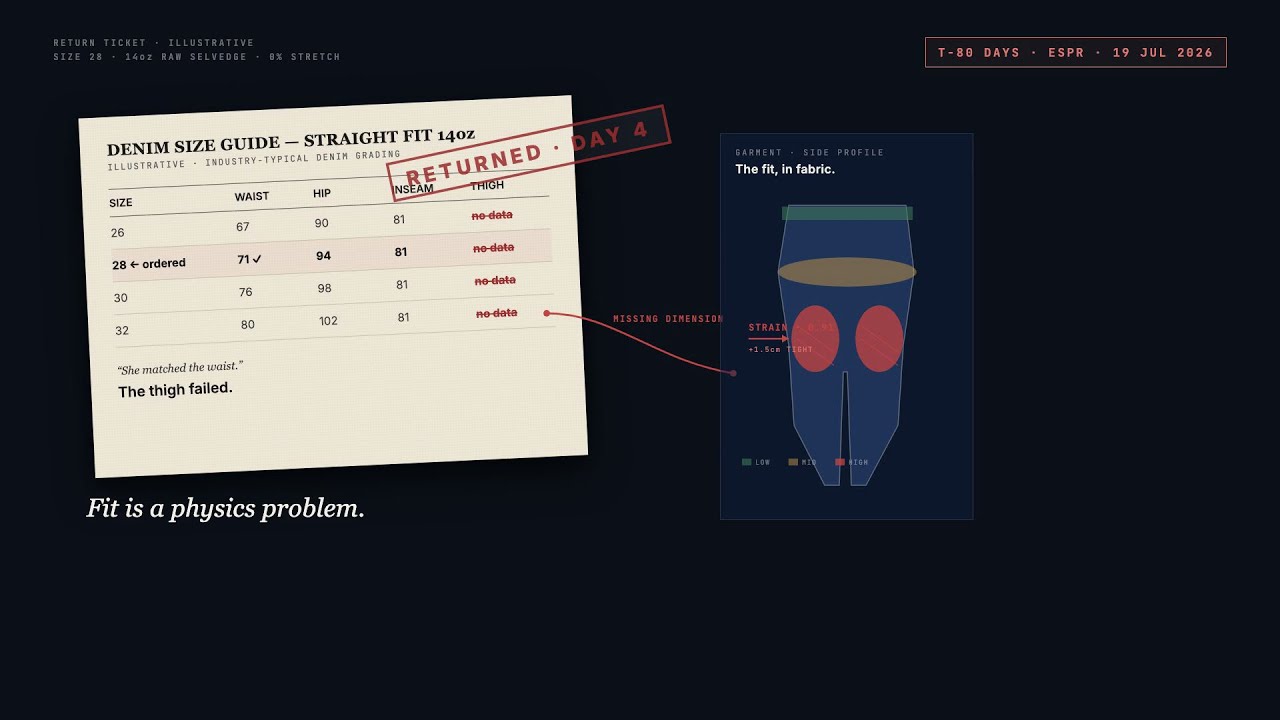
WatchAI Fit Prediction for Fashion E-Commerce
Fashion e-commerce loses more money to returns than to marketing, logistics, or fraud combined. The root cause in 53-70% of apparel returns is the same: the garment did not fit. Size charts reduce this to a guessing game.
 Watch
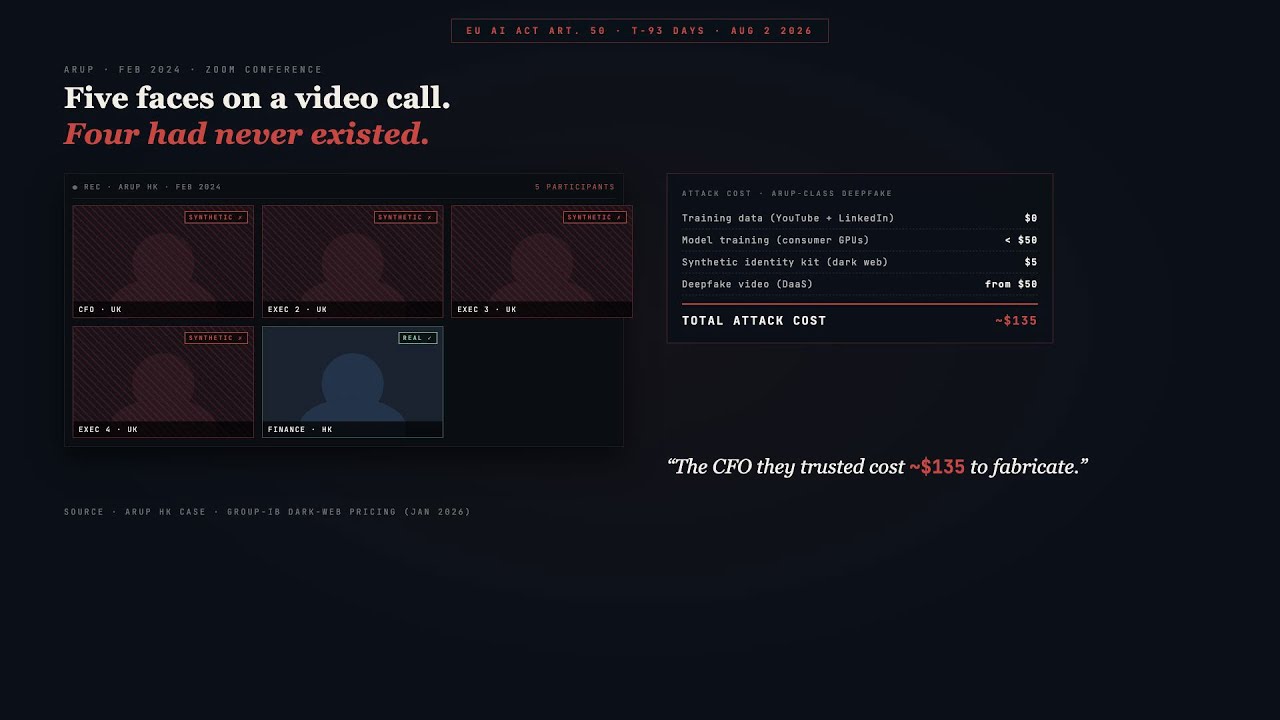
WatchEnterprise Deepfake Detection & Video Call Fraud Prevention
In February 2024, attackers used AI-generated deepfakes of an entire executive team to steal $25. 6 million from Arup in a single video call. Since January 2026, standard cyber insurance policies explicitly exclude deepfake fraud.
 Watch
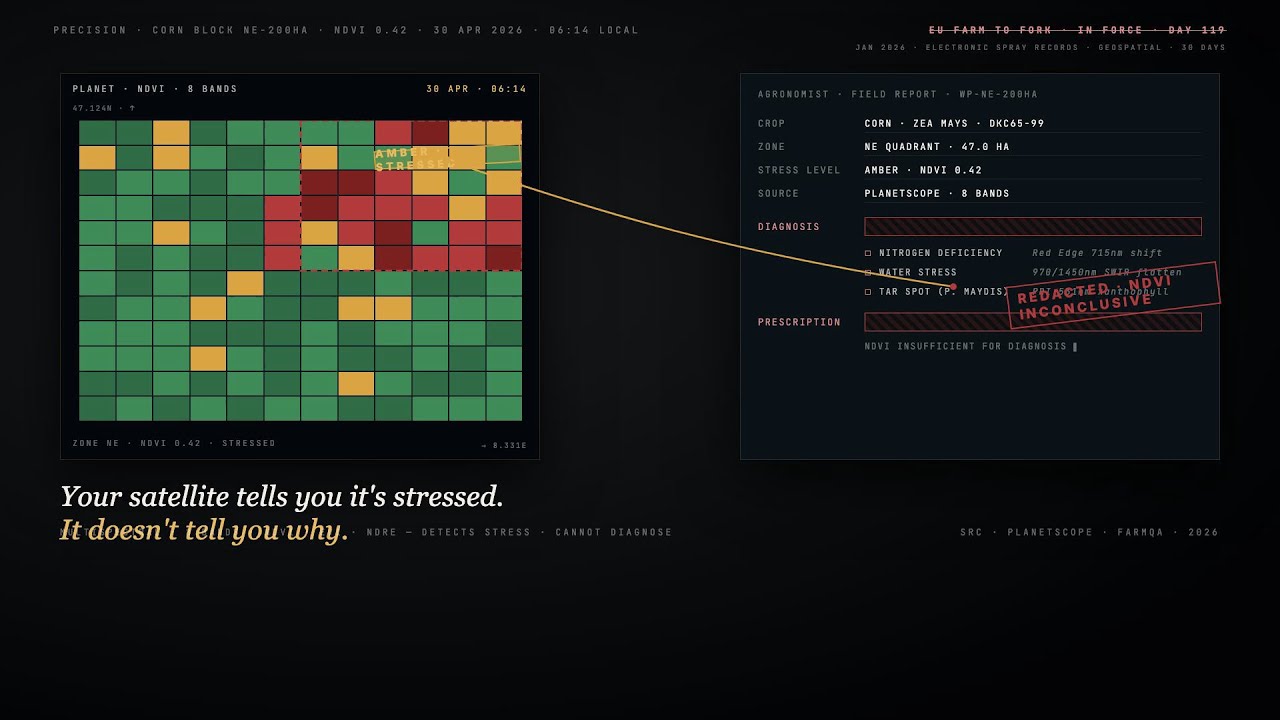
WatchHyperspectral AI for Precision Agriculture
Multispectral monitoring (Planet, Sentinel-2, NDVI) detects that something is wrong. Hyperspectral deep learning diagnoses what is wrong, why, and what to do about it. We build the custom spectral analytics that close the gap between detection and prescription for large-scale farming operations and specialty growers.
 Watch
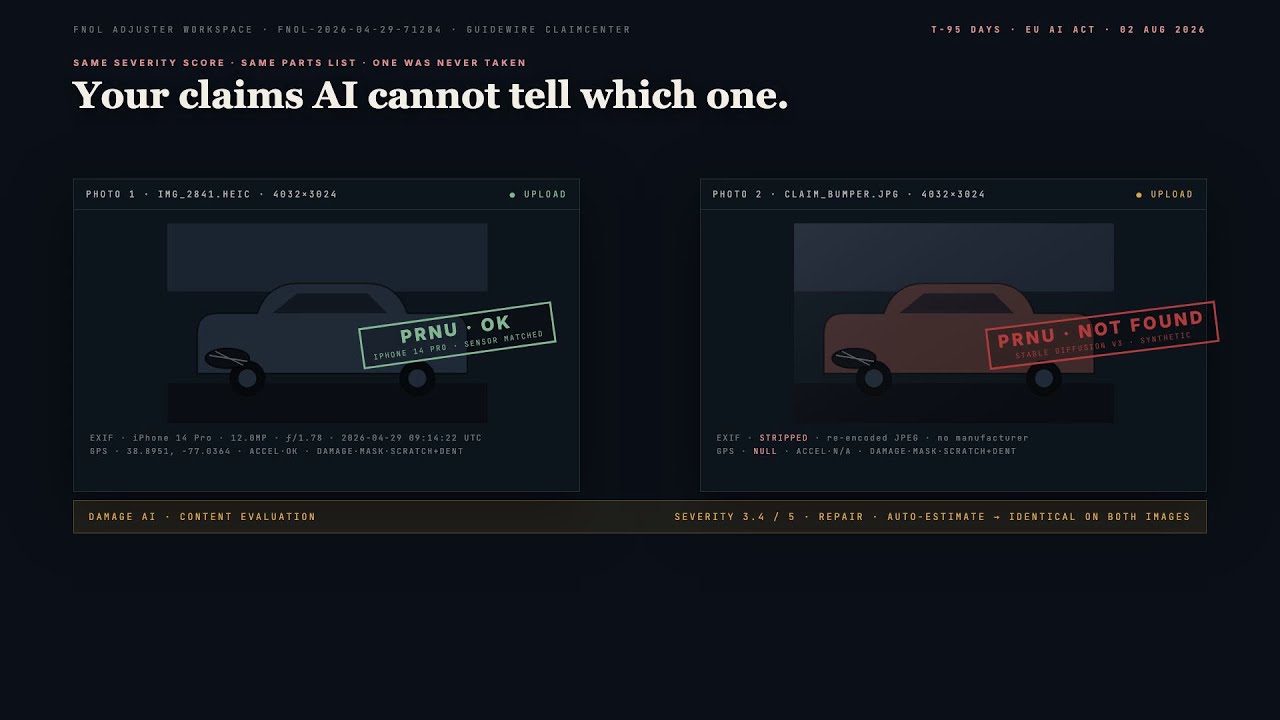
WatchInsurance Claims AI & Deepfake Detection
Auto insurers are caught between two AI-driven threats: fraudsters generating synthetic damage photos that pass existing checks, and "enhancement" tools that alter evidence before adjusters see it. Veriprajna builds forensic computer vision that authenticates, measures, and preserves every pixel of claims evidence.
 Watch
WatchSatellite Flood Intelligence for Parametric Insurance
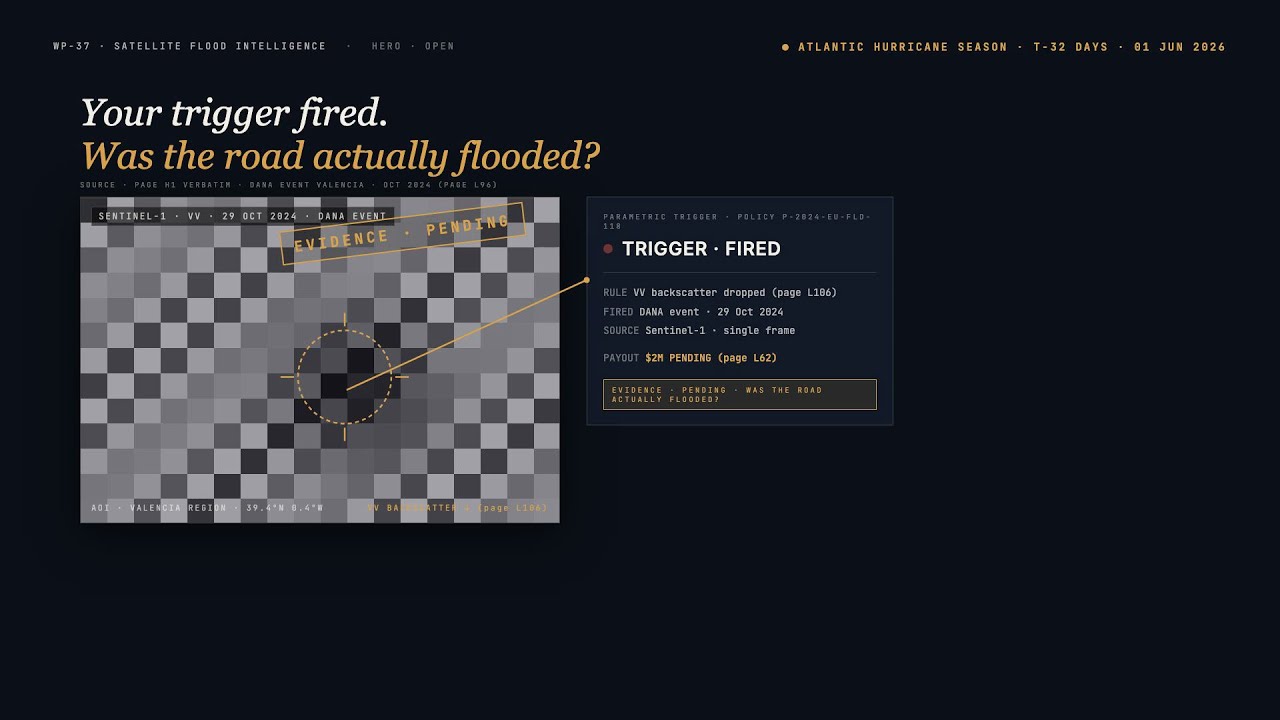
Single-frame satellite detection confuses cloud shadows with floodwater. When a $2M parametric payout depends on that classification, "probably flooded" is not good enough. We build flood verification systems that separate shadows from water using temporal SAR-optical fusion, producing forensic-grade evidence trails for every trigger event.
 Watch
WatchSynthetic Content & Fake Review Detection
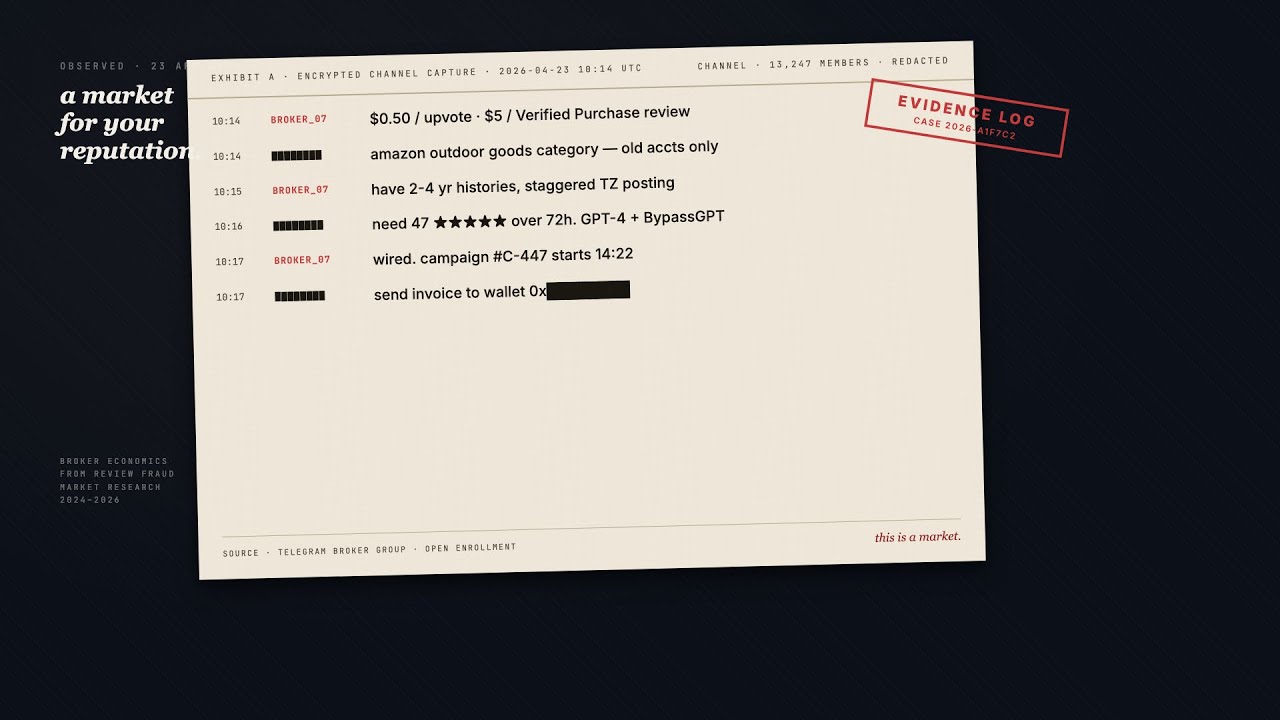
Custom AI systems that detect fake reviews, synthetic content, and coordinated fraud across every platform where your brand appears. Built for the FTC's new enforcement reality.
Frequently Asked Questions
How much does a custom computer vision system cost and what is the ROI timeline?
A typical industrial CV deployment runs $50K-$500K depending on scope, model complexity, edge hardware requirements, and regulatory obligations. In manufacturing quality inspection, documented case studies show 6-18 month payback periods. An electronics manufacturer reduced defect escape rates from 2.3% to 0.1%, saving $1.8M annually in warranty claims. An automotive manufacturer deploying predictive maintenance across 200+ CNC machines saved $3.2M per year. The ROI drivers are not just labor displacement (one CV system replaces 3-8 manual inspectors per shift) but quality improvement: 100% inspection versus statistical sampling catches defects that random checks miss, and the downstream savings from fewer warranty claims, recalls, and customer returns typically exceed direct labor savings by 3-5x.
Should we use a foundation model like SAM 2 or train a custom model?
Both, in sequence. Foundation models (SAM 2, Grounding DINO, Florence-2) are transformative for labeling: they cut annotation costs by 40-60% across every task type, with the largest savings on pixel-level segmentation where manual labeling is most expensive. But foundation model inference is 5-10x slower than a purpose-trained detector. You cannot run SAM 2 at line speed on edge hardware. The production pattern that works is using foundation models to generate training labels cheaply, then distilling to a lightweight task-specific model (YOLO, EfficientDet, RT-DETR) optimized for the target device. The foundation model accelerates your annotation pipeline. The distilled model runs in production. Skipping the distillation step is the most common mistake teams make when adopting foundation models for CV.
When should we use Cognex or Keyence instead of a custom CV system?
Cognex and Keyence command roughly 50% of the industrial machine vision market and cover a wide range of standard inspection tasks. Cognex excels at high-accuracy inspection in semiconductor and automotive. Keyence ships integrated bundles that production engineers can configure without writing code. Cognex's 2025 OneVision platform lets non-experts upload defect images and get an auto-trained model deployed to factory cameras. If your inspection task fits standard categories (surface defects, dimensional checks, presence/absence) with stable lighting and fixed product geometry, buying is faster and cheaper. Custom CV is the right choice when the defect taxonomy evolves frequently, when you need to fuse vision with non-visual process data (vibration, thermal, chemical), when regulations require full model traceability, or when environmental variability exceeds what fixed recipes can handle.
How do you handle model drift after a CV system is deployed?
Over 70% of organizations report significant performance degradation within six months of deploying a CV model. Drift comes from three sources: data drift (lighting changes, camera aging, material variation), concept drift (new defect types or product variants), and label drift (evolving quality standards). We build monitoring into the deployment from the start. Statistical drift detection using Population Stability Index (PSI > 0.2 triggers alerts) and KS-tests runs continuously on inference outputs. When drift exceeds thresholds, the system flags affected production windows and can trigger automated retraining workflows or queue human review. The monitoring stack uses Evidently AI for metrics, with dashboards tracking prediction distribution shifts and edge-case encounter rates. We also build the retraining pipeline so the correction loop is hours, not weeks.
What is the difference between vision-language models and traditional CV pipelines?
Traditional CV pipelines (YOLO, EfficientDet, Mask R-CNN) produce structured outputs: bounding boxes, segmentation masks, class labels with confidence scores. They run in single-digit milliseconds, are deterministic, and deploy on edge hardware. Vision-language models (GPT-4o, Gemini, Claude, Qwen2.5-VL) take an image and a text prompt and produce natural language responses. They excel at visual question answering, document understanding, and anomaly description, but run at hundreds of milliseconds per inference with non-deterministic outputs. Open-source VLMs now perform within 5-10% of proprietary models at 64% lower cost when self-hosted. The practical architecture is hybrid: a traditional detector finds objects or anomalies at line speed, then a VLM reasons about context for the cases that need explanation. We build both components and the integration layer between them.
Does our medical imaging AI need FDA clearance?
If your software interprets medical images and its output informs clinical decisions, it almost certainly qualifies as Software as a Medical Device and needs FDA authorization. The FDA cleared 295 AI/ML-enabled devices in 2025 alone, bringing the cumulative total to 1,451, with 76% in radiology. 97% went through the 510(k) pathway. The January 2025 draft guidance introduces the Predetermined Change Control Plan, which allows post-market model updates without new submissions if changes stay within pre-approved parameters. This matters for any AI system that learns or adapts. For teams building medical CV, the regulatory pathway should shape architecture decisions from the start: you need documented uncertainty quantification, performance monitoring across demographic subgroups, and version-controlled training pipelines. Retrofitting these for a submission is far more expensive than building them in.
How does the EU AI Act affect computer vision deployments?
The EU AI Act's prohibited practices took effect February 2, 2025. Untargeted scraping of facial images from the internet or CCTV is an absolute prohibition with penalties up to EUR 35 million or 7% of global turnover. Emotion recognition in workplaces and educational settings is also prohibited except for medical or safety purposes. High-risk CV system rules become enforceable August 2, 2026, covering biometric identification systems, CV in critical infrastructure, employment-related visual analysis, and CV used in law enforcement or migration. High-risk classification requires conformity assessments, CE marking, risk management documentation, data governance records, human oversight mechanisms, and registration in the EU database. Quality inspection CV in manufacturing generally falls outside high-risk unless it is used for worker surveillance or monitoring. We classify systems against the AI Act's risk taxonomy and build the documentation and architectural features that compliance requires.
How has auto-labeling changed annotation costs for computer vision?
Dramatically. Manual bounding box annotation costs $0.02-0.09 per object. Manual semantic segmentation costs $5-15 per label. 3D point cloud annotation runs $6-20+ per label. With foundation-model auto-labeling (SAM 2, Grounding DINO, YOLO-World), you generate initial labels from text prompts, then human reviewers correct errors. Review is faster than labeling from scratch. Mature deployments report 40-60% cost reduction versus fully manual workflows. Auto-labeling achieves 70-85% accuracy, sufficient for most detection and segmentation tasks after human correction. The correction step is non-negotiable: 20-30% of labels have quality issues even with manual annotators, and auto-labeling shifts the quality problem from creation to verification. Active learning then focuses human effort on the edge cases where model uncertainty is highest, maximizing the value of every dollar spent on annotation.
Build Your AI with Confidence.
Partner with a team that has deep experience in building the next generation of enterprise AI. Let us help you design, build, and deploy an AI strategy you can trust.
Veriprajna Deep Tech Consultancy specializes in building safety-critical AI systems for healthcare, finance, and regulatory domains. Our architectures are validated against established protocols with comprehensive compliance documentation.