AI Governance Programs Built as Operational Infrastructure
We build operational AI governance programs: policy-as-code enforcement, risk classification, audit trail architecture, and multi-jurisdictional compliance mapping.
Most AI governance programs exist as PDF documents that engineering teams ignore. Our approach is to build governance as operational infrastructure — a policy-as-code layer that turns regulatory obligations into machine-readable rules enforced automatically in CI/CD pipelines, model registries, and deployment gates. The gap between policy intent and engineering practice is where governance programs fail; policy-as-code closes it by making compliance a build artifact, not a quarterly review.
Governance Programs That Run as Production Systems, Not Policy Binders
An engagement is scoped to produce a policy-as-code layer where regulatory obligations from the EU AI Act, NIST AI RMF, ISO 42001, and applicable state laws are encoded into machine-readable rules that enforce automatically in CI/CD pipelines, model registries, and deployment gates. Two examples of how obligation becomes automation:
- When Article 9 requires a risk management system maintained throughout the AI lifecycle, that becomes a schema-validated risk assessment artifact generated at each pipeline stage.
- When Annex IV requires technical documentation kept up to date, that becomes automated model card generation triggered by every training run.
The gap between policy intent and engineering practice is where governance programs fail. Policy-as-code closes it by making compliance a build artifact, not a quarterly review, as detailed in our research on engineering regulatory truth into enterprise AI. Organizations adopting this approach see 40-70% reductions in compliance operational costs because the enforcement mechanism is the policy itself. There is no separate audit preparation, no frantic documentation assembly before a regulator visits — the system produces conformity evidence continuously.
Starting from Where You Actually Are: Discovery and Risk Classification
The honest starting point for any governance program is inventory. Gartner found that organizations deploying governance platforms are 3.4x more likely to achieve high governance effectiveness, but a platform managing 30 known systems is useless when 68% of employees are using free-tier AI tools the organization has never evaluated (Menlo Security, 2025). The first phase of every engagement is discovery:
- Mapping sanctioned AI systems;
- Identifying shadow AI through network traffic analysis, API call logging, and procurement record review;
- Building the complete asset register that makes everything else possible.
Each discovered system gets classified against the applicable regulatory taxonomy. For EU-facing operations, that means mapping to AI Act Annex III high-risk categories. For US operations, it means evaluating against Colorado SB 205's consequential-decision criteria, Texas TRAIGA's restricted-purpose prohibitions, Illinois HB 3773's employment-decision rules, and whatever additional state requirements apply to the organization's footprint. The classification output is a per-system compliance matrix showing exactly which obligations attach, which documentation artifacts are required, and what the enforcement timeline looks like.
From Risk Classification to Enforceable Controls
Classification without controls is just a spreadsheet. For each risk tier, our approach builds the control architecture designed to make compliance demonstrable, informed by our research on the governance frontier of algorithmic integrity and enterprise liability. High-risk systems under the EU AI Act carry five obligation areas, each mapped to a specific technical control:
| EU AI Act obligation | Technical control we build |
|---|---|
| Article 9 — risk management systems | Risk assessments become pipeline gates |
| Article 11 — technical documentation per Annex IV | Documentation becomes schema-enforced model cards |
| Article 13 — transparency and information provision | Transparency becomes user-facing disclosure components |
| Article 14 — human oversight mechanisms | Human oversight becomes escalation triggers with configurable thresholds |
| Article 15 — accuracy, robustness, and cybersecurity | Robustness becomes automated adversarial testing in staging environments |
For deployers subject to Article 27, an engagement is scoped to produce the Fundamental Rights Impact Assessment (FRIA) workflow: standardized templates pre-mapped to the organization's deployment contexts, review routing that pulls in legal, technical, and domain-expert sign-off before first use, and automated notification to market surveillance authorities. The FRIA process integrates with existing DPIA workflows where they overlap, eliminating duplicate effort while satisfying both GDPR and AI Act obligations.
Multi-Jurisdictional Compliance Without Parallel Programs
Running separate compliance programs per jurisdiction does not scale. A US-headquartered company with EU customers, Colorado employees, and Texas operations faces at least four overlapping regulatory regimes for a single AI system. Our approach builds a unified compliance framework designed so obligations from each jurisdiction map to a shared control library:
- A bias testing requirement that satisfies Colorado's algorithmic discrimination standard simultaneously produces evidence for EU AI Act fairness obligations under Article 10(2).
- A risk management system built to NIST AI RMF's GOVERN/MAP/MEASURE/MANAGE structure maps directly to ISO 42001 Clause 6 planning requirements and Article 9 of the AI Act.
The practical output is a jurisdiction overlay system: base controls that satisfy the strictest applicable standard, with jurisdiction-specific documentation layers that produce the right artifacts for each regulator. When a new state law passes or the EU AI Office issues guidance, the overlay updates. The base controls rarely change because they are already built to the highest bar.
Agentic AI Governance: Identity, Attribution, Containment
Autonomous agents create governance requirements that traditional frameworks were not designed to handle. An agent with its own credentials, making API calls across systems, triggering financial transactions or modifying production data, needs governance infrastructure that tracks identity, attributes decisions, and contains failures — the subject of our research on securing the human-AI frontier of agentic autonomy. Gartner projects 40% of enterprise applications will embed AI agents by end of 2026, but only 23% of organizations have an agent identity management strategy. Our approach builds the four governance layers agentic systems require:
- Identity and credential management: each agent gets a managed identity with scoped permissions, rotated credentials, and an audit log of every action taken under that identity.
- Decision attribution: a trace from every autonomous action back to the authorizing policy, the triggering input, and the human-approved scope boundary.
- Cascading-failure containment: circuit breakers and rollback mechanisms that prevent one agent's error from propagating through multi-agent orchestration chains.
- Escalation triggers: configurable thresholds where agent autonomy yields to human review, based on risk scoring rather than blanket approval gates.
Audit Trail Architecture That Produces Evidence, Not Logs
Regulatory evidence is not the same as application logs. A log tells you what happened. Evidence tells a regulator why it happened, what controls governed the decision, and what the system's state was at the time. EU AI Act Article 19 requires automatically generated logs retained for at least six months. Financial services regulators expect 7+ years. Healthcare expects 6+. The audit-trail architecture our approach produces, informed by our research on the architecture of accountability for enterprise AI, captures three layers for every AI decision:
- The event itself;
- The context that influenced it — model version, training data lineage, configuration state;
- The controls active at the time — which policies were enforced, what thresholds applied, whether human oversight was invoked.
This architecture is designed to produce conformity evidence on demand. When an auditor asks for documentation of a specific decision, the system reconstructs the complete decision context without manual assembly. When a regulator requests proof that risk management measures were in place at a given date, the system provides the exact policy version, gate configuration, and test results that were active. The evidence generation is continuous and automatic. Compliance teams stop spending weeks preparing for audits and start spending that time on actual governance improvement.
Key Takeaways
- Governance is delivered as a policy-as-code layer designed to enforce EU AI Act, NIST AI RMF, ISO 42001, and state-law obligations automatically in CI/CD pipelines, model registries, and deployment gates — not as a PDF binder.
- Every engagement starts with discovery (sanctioned systems, shadow AI, asset register) and per-system risk classification against Annex III, Colorado SB 205, Texas TRAIGA, and Illinois HB 3773.
- High-risk EU controls map Articles 9, 11, 13, 14, and 15 to concrete engineering artifacts, with Article 27 FRIA workflows integrated into existing DPIA processes.
- A single jurisdiction overlay — base controls at the strictest bar plus per-regulator documentation layers — replaces parallel per-jurisdiction programs.
- Agentic systems get four dedicated layers (identity, attribution, containment, escalation), and audit trails capture event, context, and active controls to produce continuous conformity evidence rather than raw logs.
Solutions for AI Governance & Compliance Program
 Watch
WatchAI Brand Content That Consumers Actually Trust
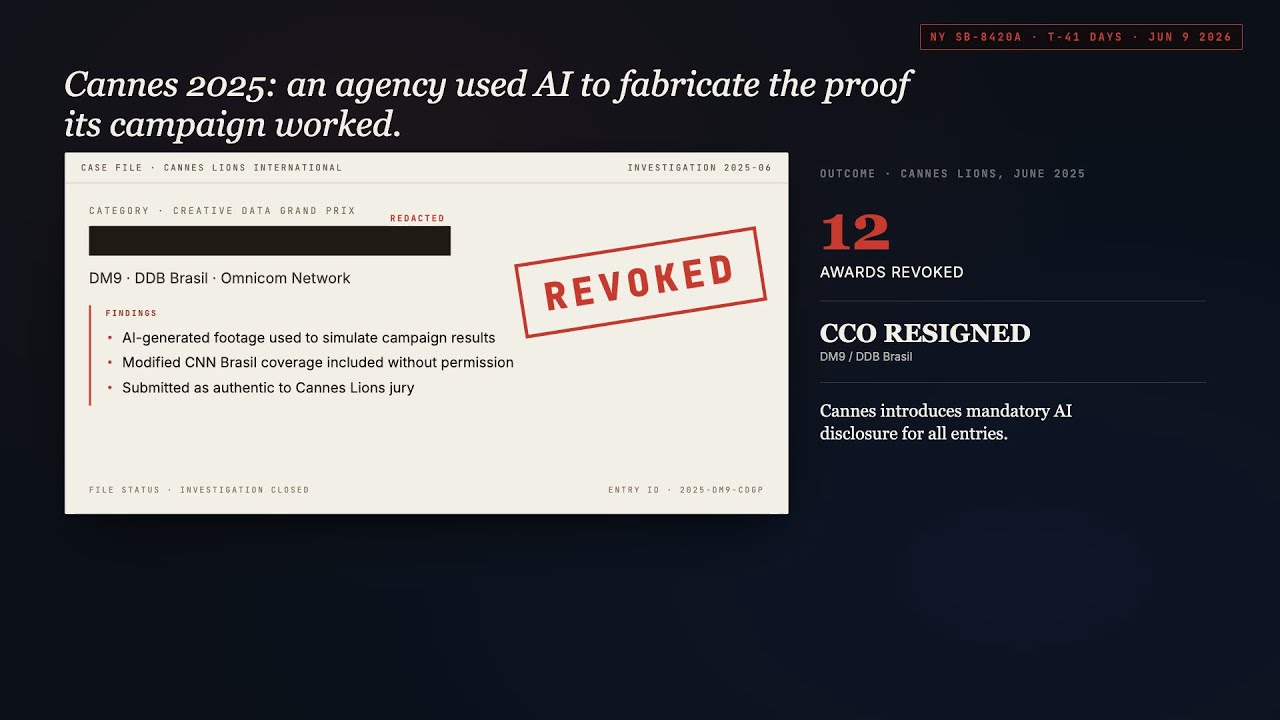
The other half doesn't care, as long as they can't tell. We build hybrid AI production pipelines, brand fidelity scoring systems, and governance frameworks that let you use AI aggressively in the process while keeping it invisible in the output.
 Watch
WatchAI Hiring Compliance & Bias Audits for Multi-Jurisdiction Employers
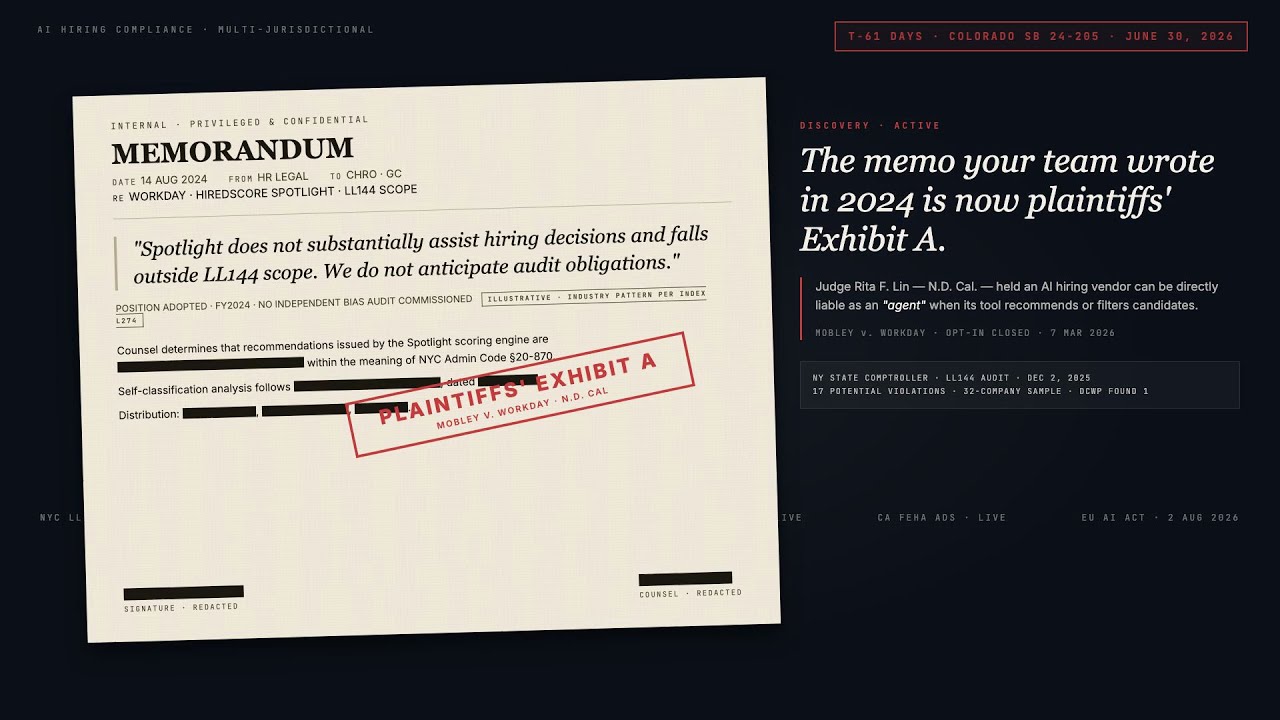
As of April 2026, the CHRO or General Counsel running AEDTs in New York, Colorado, Illinois, Texas, California, or the EU is inside a regulatory window most of their vendors were not built for. Illinois HB 3773 went live January 1. Texas TRAIGA went live January 1.
 Watch
WatchAI Pricing Compliance & Algorithmic Fairness
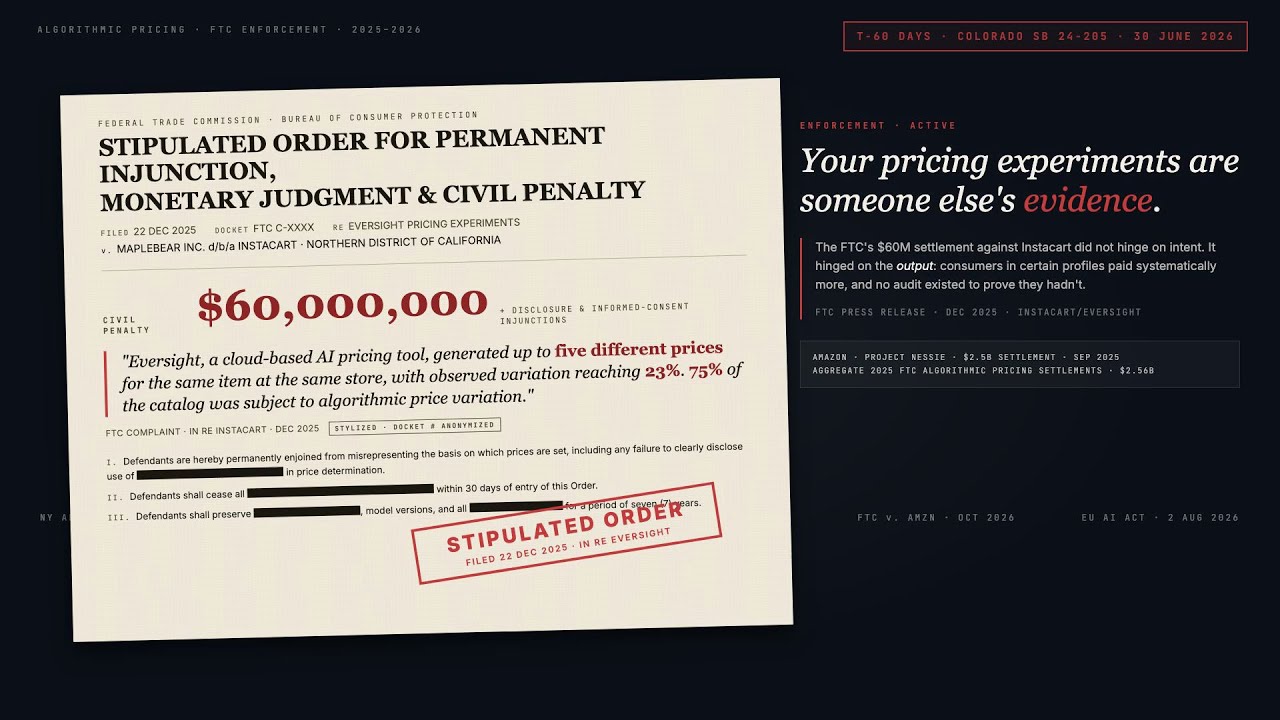
In 2025, the FTC collected $2. 56 billion in algorithmic pricing settlements from two companies. New York, California, and Colorado enacted laws that make every AI-driven price a potential violation.
 Watch
WatchAI Product Liability Defense
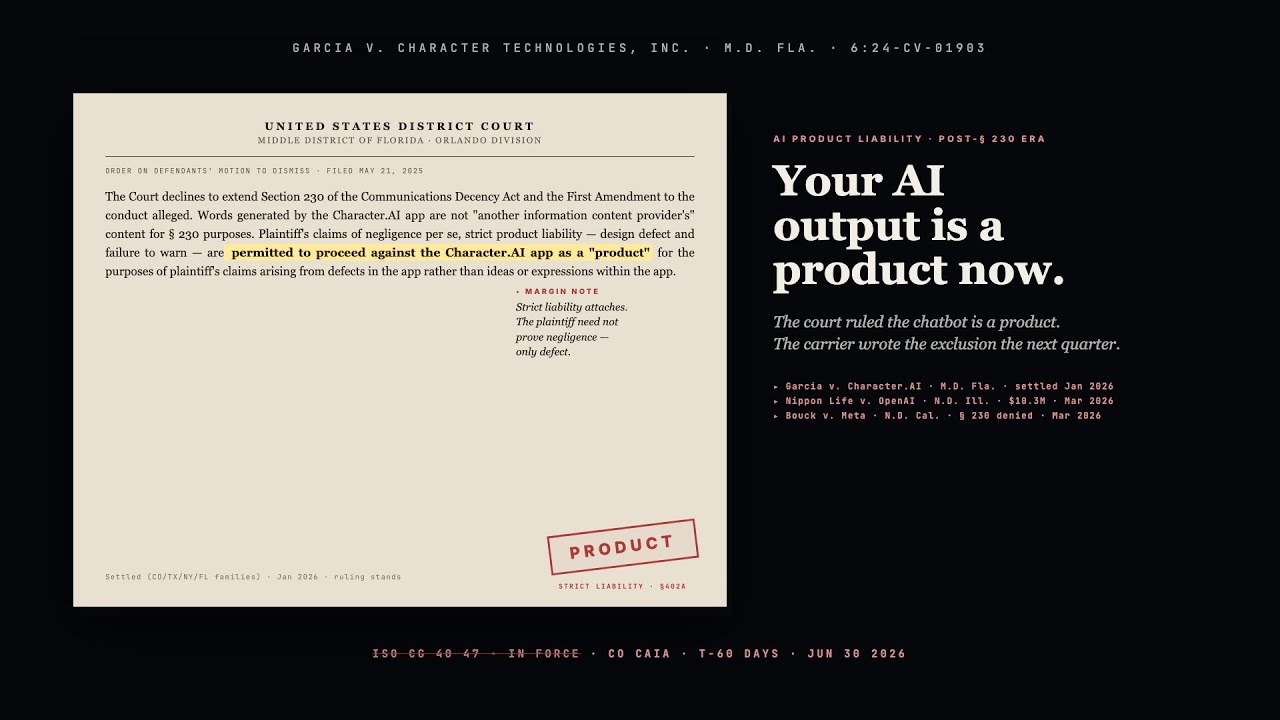
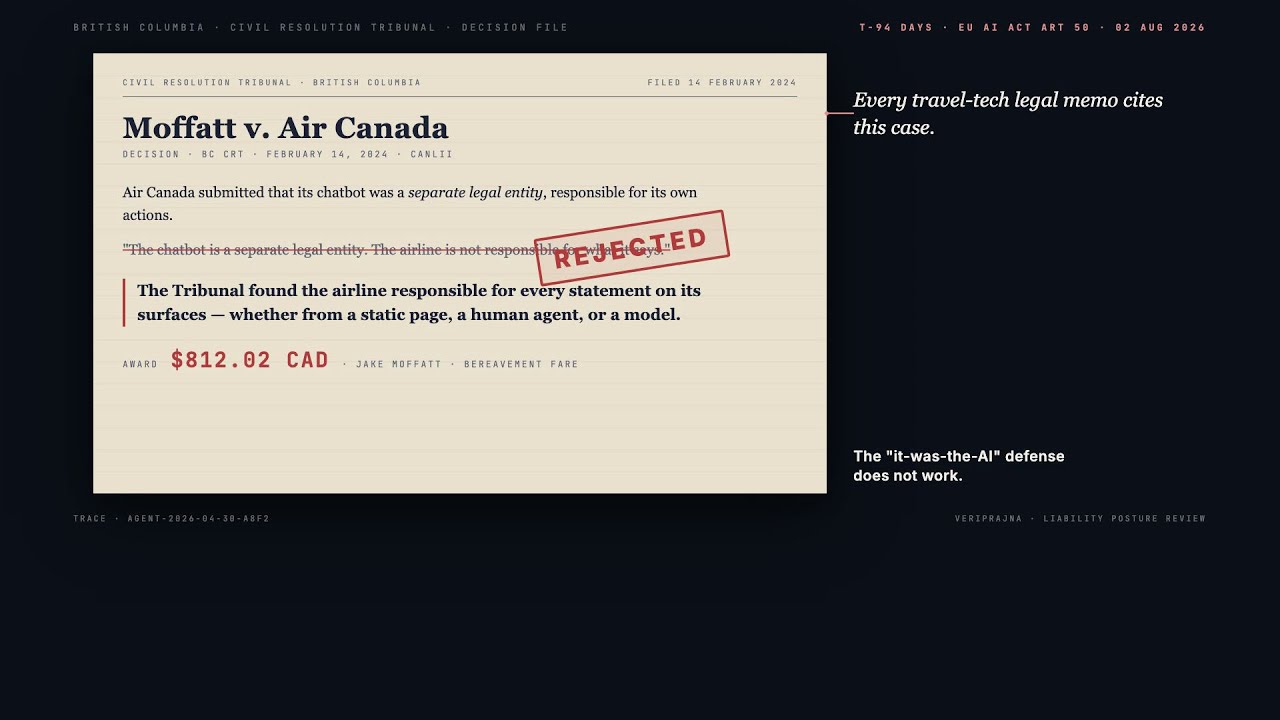
Enterprise AI liability is shifting from negligence to strict product liability. Veriprajna builds defensible AI architectures, litigation-ready audit trails, and insurance positioning packages for legal teams facing the post-Section 230 era.
 Watch
WatchAI Sales Intelligence & Verified Outreach
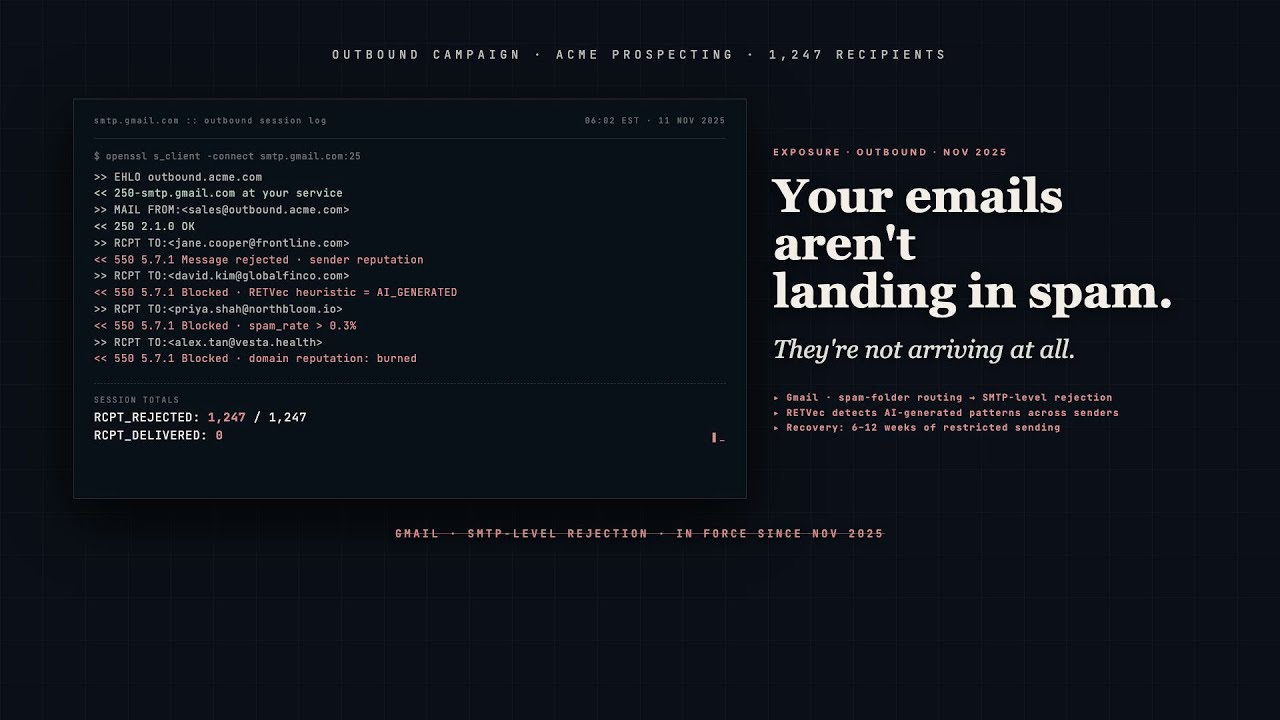
AI outbound tools send more emails. They also hallucinate prospect details, trigger spam filters, and create legal exposure. Signal-personalized outreach converts 5x better than generic blasts, but only when every claim is verified against source data.
 Watch
WatchAI Verification & Anti-AI-Washing Compliance
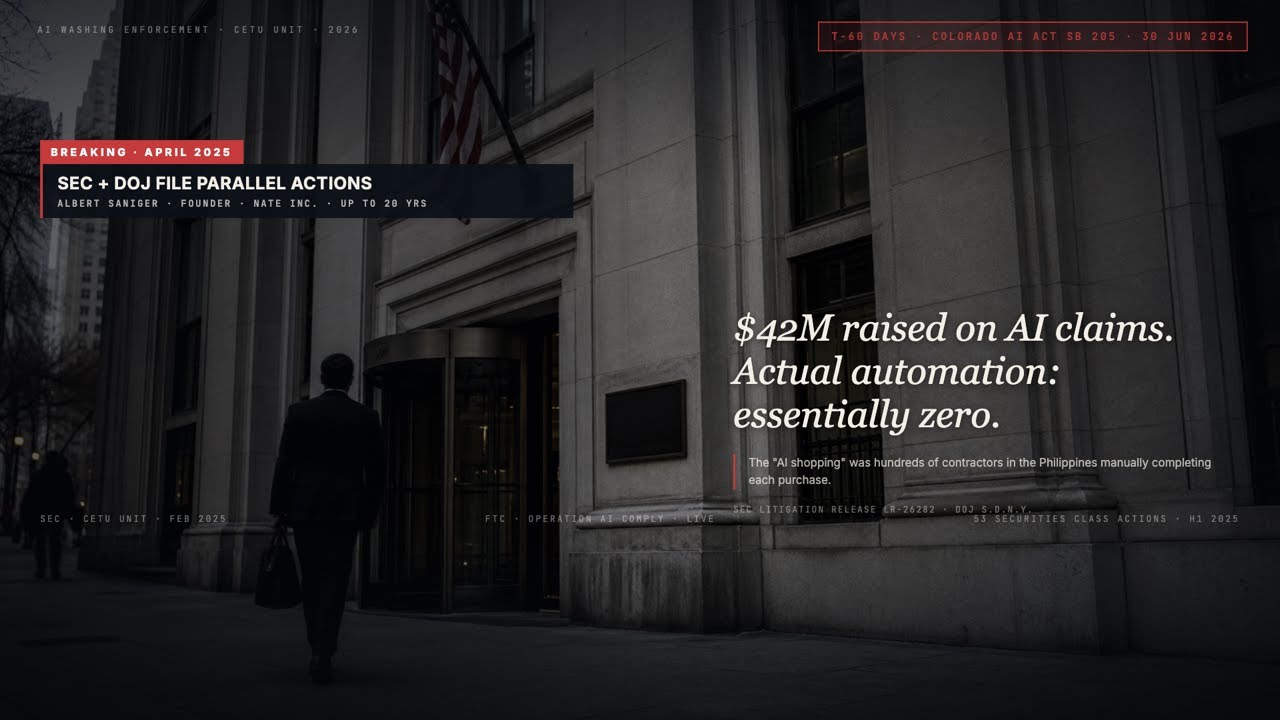
Substantiate your AI claims before regulators ask. Veriprajna builds AI verification architecture, AIBOM systems, and claim substantiation packages for SEC, FTC, and state AG compliance.
 Watch
WatchAI for Architecture & Structural Engineering
Generative AI creates stunning architectural concepts in seconds. Then your structural team spends weeks proving they cannot be built. Eighty percent of construction cost deviation comes from design changes, not construction mistakes.
 Watch
WatchAgentic AI Travel Booking for TMCs and OTAs
Sabre with Mindtrip and PayPal is shipping end-to-end agentic booking in Q2 2026. Google AI Mode is booking Marriott directly. Amadeus Cytric Easy lives inside Microsoft Teams.
 Watch
WatchAirline Crew Scheduling AI: IROPS Recovery That Works When Legacy Solvers Fail
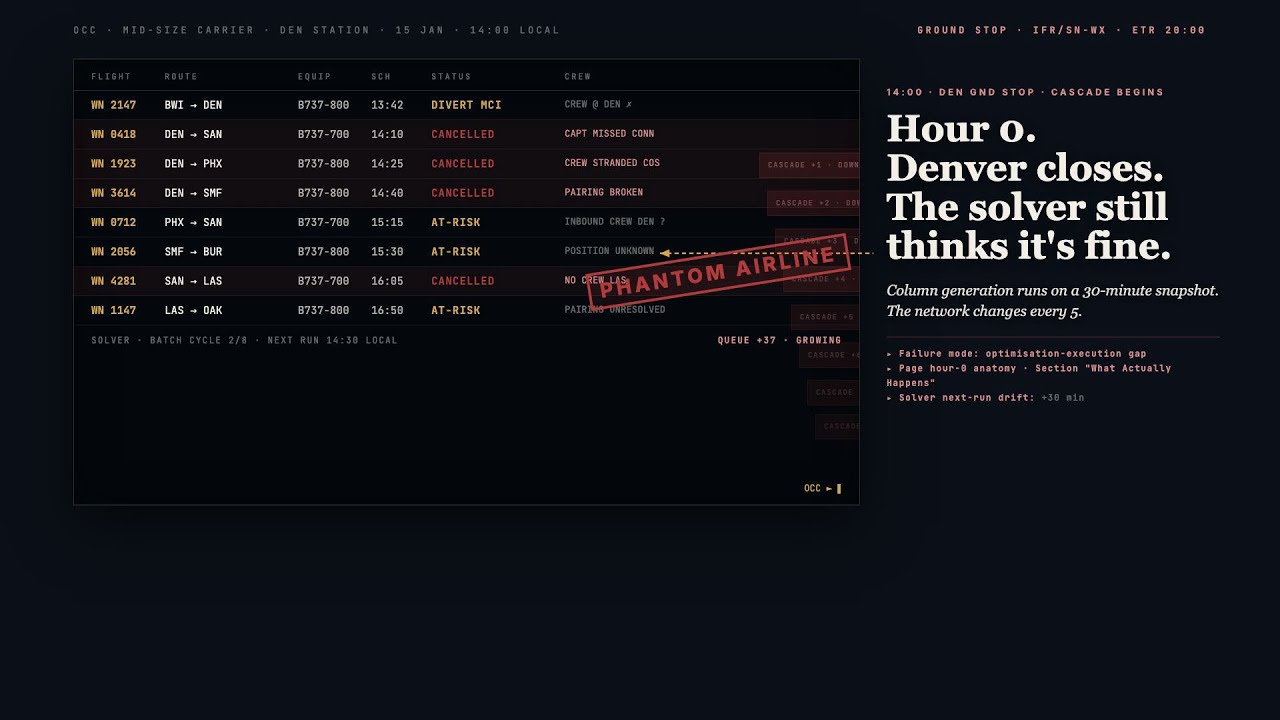
AI-powered crew scheduling and IROPS recovery for mid-size airlines. Augment Jeppesen or IBS with ML that handles cascading disruptions, crew tracking gaps, and DOT refund exposure.
 Watch
WatchBiometric & Facial Recognition Compliance
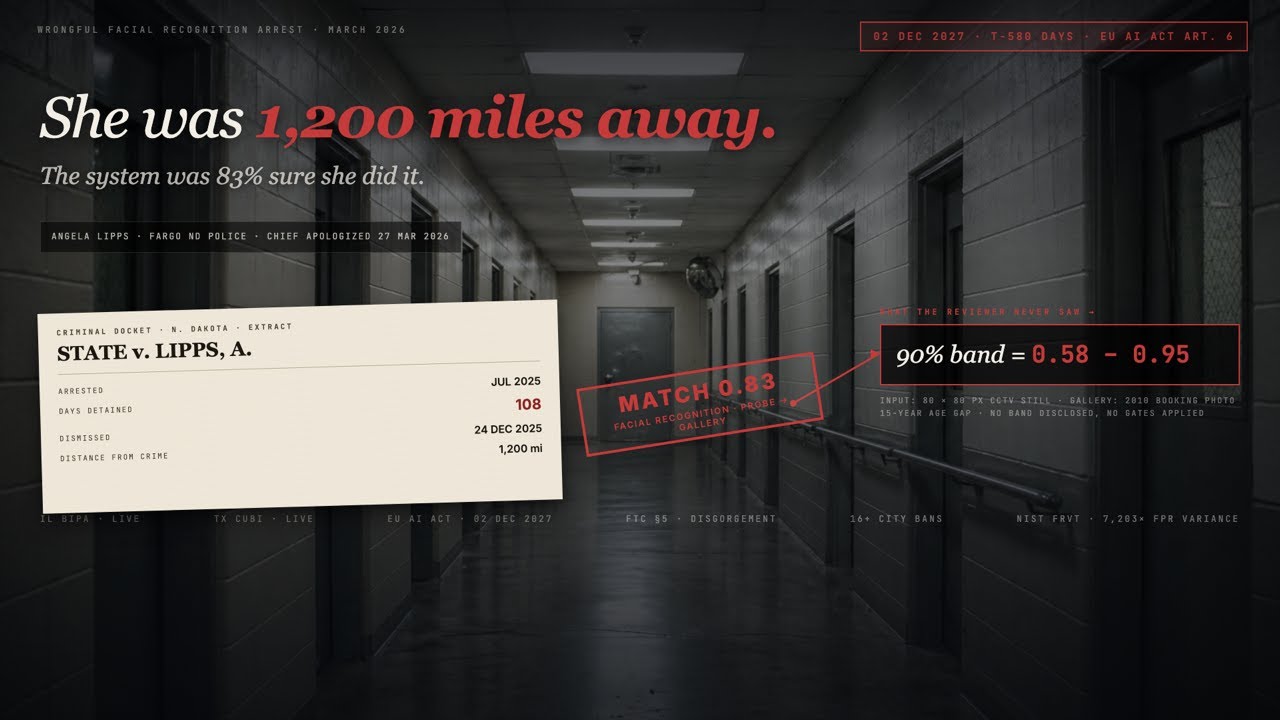
Whether you have deployed facial recognition and need to know your exposure, or you are evaluating vendors and want to get it right the first time, we audit biometric systems against the regulations, benchmarks, and operational standards that actually matter.
 Watch
WatchMedicare Advantage AI Governance & Algorithmic Compliance
Audit, explain, and defend your Medicare Advantage AI. Explainability middleware, CMS-0057-F compliance architecture, and litigation readiness for health plan algorithms.
 Watch
WatchSmart Facility Fall Detection & Ambient Monitoring for Senior Living
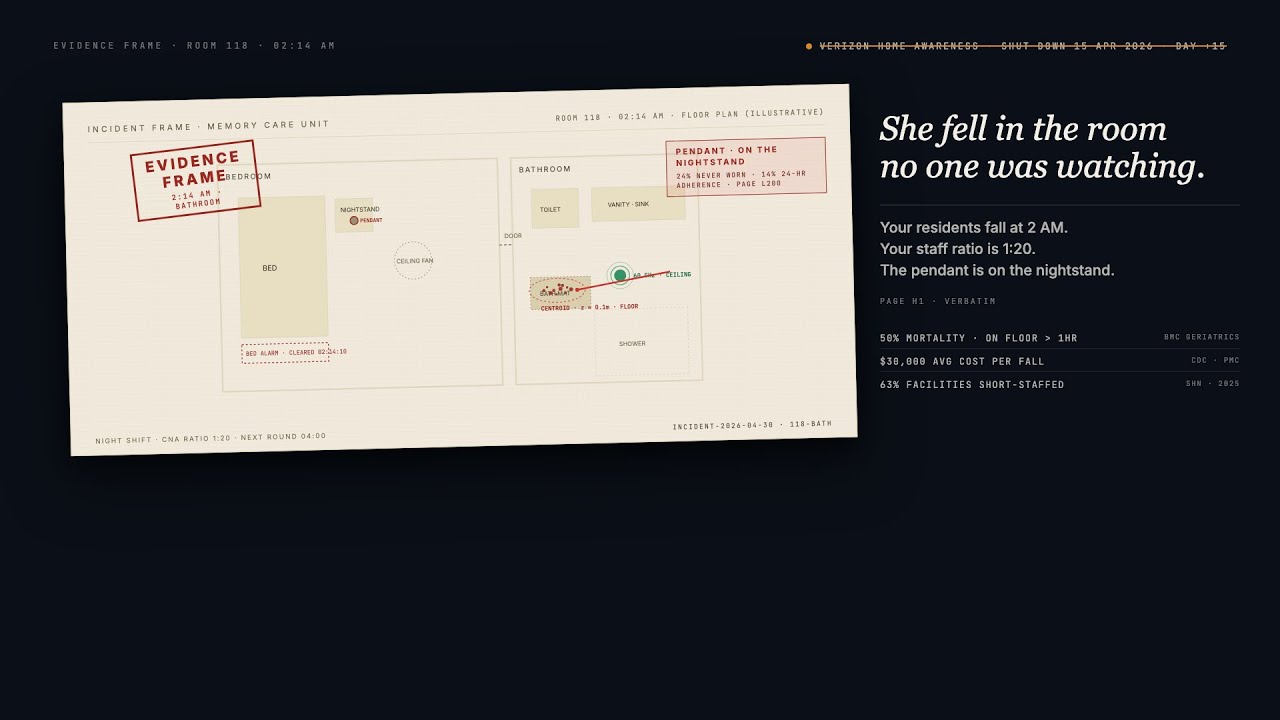
Passive, privacy-preserving fall detection and ambient monitoring for assisted living and skilled nursing facilities. mmWave radar for high-risk rooms. Wi-Fi sensing for whole-building coverage.
Related Industries
Frequently Asked Questions
How long does it take to build an AI governance program?
A foundational governance program takes 4-6 months: 4-6 weeks for AI system discovery and risk assessment, 8-10 weeks for policy development and policy-as-code encoding, 6-8 weeks for technical control implementation (audit trails, pipeline gates, model card automation), and 4-6 weeks for training and organizational rollout. The timeline depends on how many AI systems are already in production, how many jurisdictions apply, and whether the organization has an existing GRC infrastructure to integrate with. Organizations starting with a single high-risk system and one jurisdiction can have enforceable controls in 8-10 weeks. Enterprises with 50+ systems across EU and US operations typically need the full 6 months for the first phase, with ongoing expansion afterward.
What does policy-as-code mean for AI governance and why does it matter?
Policy-as-code translates regulatory obligations into machine-readable rules that enforce automatically. Instead of a PDF stating 'all high-risk AI systems must undergo bias testing before deployment,' the requirement becomes an automated gate in the CI/CD pipeline that blocks deployment until bias test results meet defined thresholds. We use Open Policy Agent (OPA) with Rego policies for infrastructure-level enforcement and custom validation schemas for model documentation requirements. Organizations adopting policy-as-code report 40-70% reductions in compliance operational costs because enforcement is continuous and automatic rather than depending on manual review cycles. The critical advantage is eliminating the gap between what policy requires and what engineering actually does.
How do you handle compliance across EU AI Act, US state laws, and sector-specific regulations simultaneously?
We build a unified control framework with jurisdiction-specific overlays rather than parallel compliance programs. Base controls satisfy the strictest applicable standard across all jurisdictions. For example, a bias testing control built to Colorado SB 205's algorithmic discrimination standard simultaneously produces evidence for EU AI Act Article 10 data governance requirements. Documentation layers generate jurisdiction-specific artifacts: Annex IV technical documentation for EU regulators, impact assessment reports for Colorado AG review, and model risk documentation for sector regulators like the OCC or FDA. When new laws pass, the overlay system updates to map new obligations to existing controls or flags gaps requiring new controls. This approach prevents the compliance sprawl where every new regulation triggers a separate program.
What is the difference between buying a governance platform and building a governance program?
Governance platforms like Credo AI, OneTrust, and IBM watsonx.governance provide dashboards for tracking compliance status, inventorying models, and scoring risk. They are visibility tools. A governance program includes the technical controls that make systems compliant in the first place: policy-as-code rules that block non-compliant deployments, audit trail architecture that captures decision provenance, automated model card generation, FRIA workflows, and human oversight mechanisms. Gartner found organizations with governance platforms are 3.4x more likely to achieve governance effectiveness, which validates the platform investment, but the platform needs controls feeding it real compliance data. We build the control layer and integrate it with whichever platform the organization uses or is evaluating.
How do you govern AI systems that are already in production without governance infrastructure?
Retrofitting governance is the reality for most enterprises. We start with a non-disruptive discovery phase: network and API analysis to identify all AI systems including shadow AI, followed by risk classification against applicable regulations. For production systems, we deploy monitoring-first: audit trail capture wraps around existing inference endpoints without modifying the model or application code. Policy gates are introduced at deployment boundaries rather than requiring re-architecture of the full pipeline. High-risk systems get prioritized for full control implementation. Lower-risk systems get lightweight monitoring with documentation artifacts. The goal is demonstrable compliance within the enforcement timeline, not a greenfield rebuild that takes years and never ships.
How should we staff and structure our AI governance function?
The structure depends on AI maturity and regulatory exposure. Organizations with fewer than 10 AI systems in production typically start with a cross-functional governance committee chaired by the CLO or CISO, meeting monthly, with a dedicated governance analyst handling day-to-day operations. Organizations with 10+ production systems or significant regulatory exposure need a dedicated AI governance lead reporting to the C-suite, whether that is a CAIO, an expanded CDO role, or a governance function under the CLO. The critical design choice is decision rights: who can approve AI system deployment, who owns ongoing monitoring, who handles incident response, and who manages regulatory communications. We build RACI matrices mapping every governance obligation to specific organizational roles, then design the committee structures and escalation paths that make those accountabilities operational.
What does the EU AI Act conformity assessment actually require for high-risk systems?
Most high-risk systems under Annex III (points 2-8) follow the internal self-assessment procedure under Annex VI. The provider verifies their quality management system meets Article 17 requirements and their technical documentation meets Annex IV specifications. Biometric identification systems require third-party assessment by a notified body under Annex VII. The self-assessment is not a checkbox exercise. It requires a documented risk management system (Article 9) maintained throughout the lifecycle, technical documentation covering design methodology, training data, performance metrics, and testing results (Article 11/Annex IV), data governance practices (Article 10), transparency measures (Article 13), human oversight provisions (Article 14), and accuracy and robustness testing (Article 15). CEN and CENELEC have not delivered harmonized standards, so there is no presumption-of-conformity shortcut. We build the documentation pipeline and quality management system that satisfies self-assessment requirements directly against the regulation text.
What is the business case for investing in AI governance now rather than waiting?
Three factors make waiting more expensive than acting. First, retrofit cost: building governance into existing AI systems costs 3-5x more than integrating it during development, and every month of uncontrolled AI deployment adds to the retrofit burden. Second, enforcement timelines are fixed: EU AI Act Annex III enforcement begins August 2026, Colorado SB 205 in June 2026, Texas TRAIGA is already active. The penalty exposure is real: up to EUR 35 million or 7% of global turnover under the AI Act, $20K per violation under Colorado. Third, governance-mature organizations see a 30% ROI advantage through fewer incidents, faster time-to-market (no last-minute compliance scrambles), and broader market access where governance is a procurement criterion. The governance platform market hitting $492 million in 2026 (Gartner) reflects that enterprises are making this investment. The question is whether it happens on your timeline or a regulator's.
Build Your AI with Confidence.
Partner with a team that has deep experience in building the next generation of enterprise AI. Let us help you design, build, and deploy an AI strategy you can trust.
Veriprajna Deep Tech Consultancy specializes in building safety-critical AI systems for healthcare, finance, and regulatory domains. Our architectures are validated against established protocols with comprehensive compliance documentation.